Capital cannot, by itself, explain artistic meaning. But it shapes the conditions in which art is produced, encountered, and remembered.
Art history is often narrated as a succession of movements, singular artists, and formal revolutions. That account is indispensable, but incomplete. An economic history runs alongside it, concerned not only with who could afford to make or commission art, but with who controlled its circulation, its public recognition, and ultimately its place in cultural memory. The surviving record is not a neutral inventory of everything that was created.
Why did the Renaissance flourish in cities built on trade and banking? How did the seventeenth-century Dutch Republic develop such an extensive market for painting? What allowed Paris to become the center of nineteenth-century modernity, and what conditions later enabled New York to assume a comparable position? Why can a painting command its highest price a century after its creator’s death?
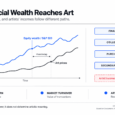
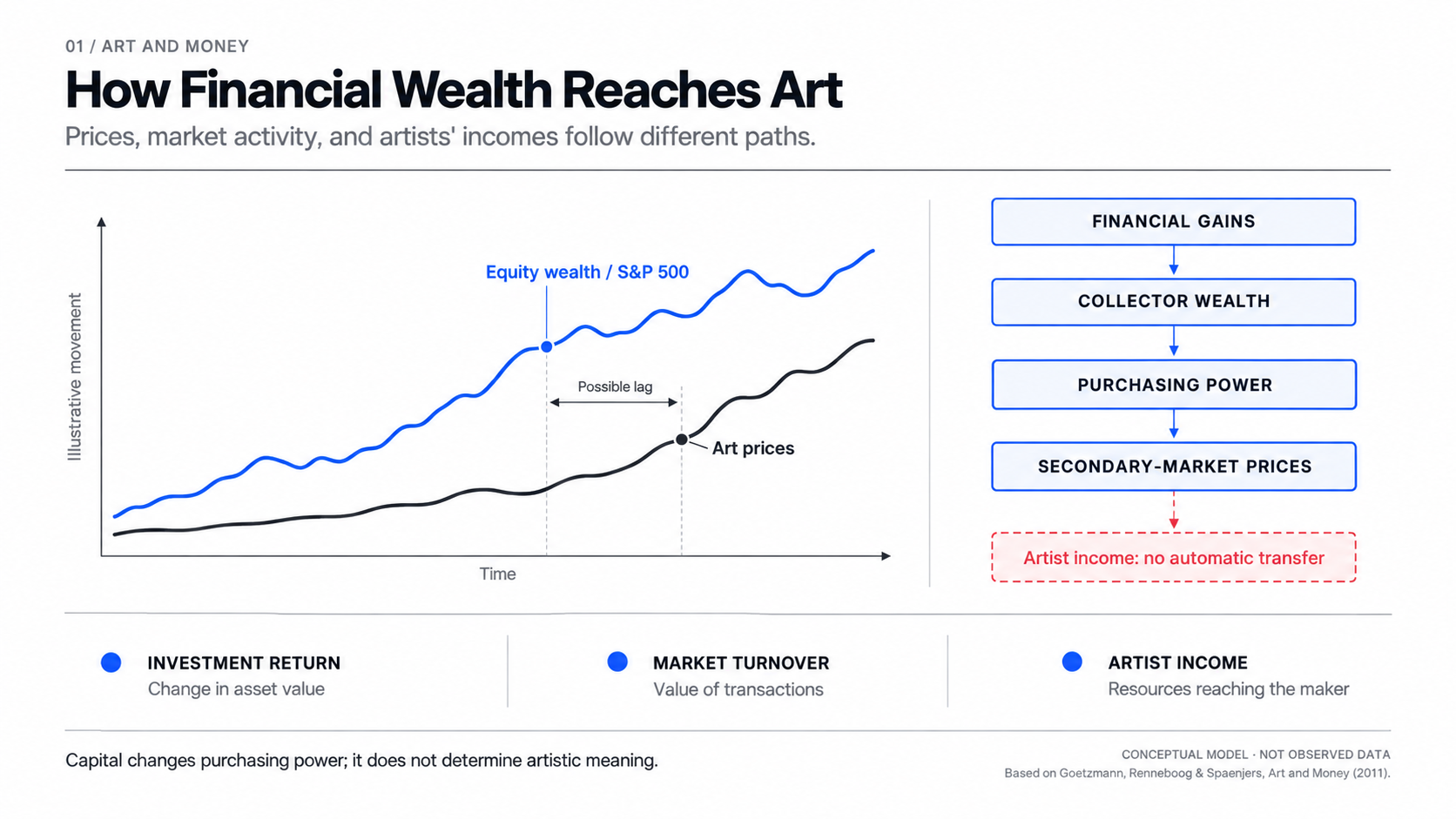
These questions demand more than a comparison between economic prosperity and artistic achievement. Capital does not pass directly into innovation. It operates within systems of patronage, commerce, political authority, and institutional recognition, each governed by different interests and constraints. A powerful patron may support extraordinary work without granting its maker intellectual independence. An expanding market may create opportunities while exposing artists to greater competition and economic insecurity. Rising asset prices may generate considerable wealth for collectors without improving the material circumstances of those producing art.
The relationship between economic development and artistic production is therefore neither linear nor predictable. Prosperity does not guarantee innovation, just as financial crises do not necessarily extinguish experimentation. Artistic invention, commercial valuation, and historical recognition follow different trajectories, often unfolding across generations and under radically different economic conditions.
This essay examines how the accumulation and distribution of wealth have influenced artistic production across centuries, from ancient systems of patronage to contemporary financial markets. Particular attention is given to the material resources available to artists, the degree of independence afforded by different economic arrangements, the structures that facilitate recognition, and the institutions responsible for preserving and interpreting cultural production.
The central question is not whether capital creates great art, but how different configurations of economic power expand certain artistic possibilities, restrict others, and influence what subsequent generations come to recognize as historically significant.
CORE · Members
Continue reading
This essay is part of CORE. Membership opens it in full, with every CORE essay, the Hypercast library and the Fakewhale AI Curator.