

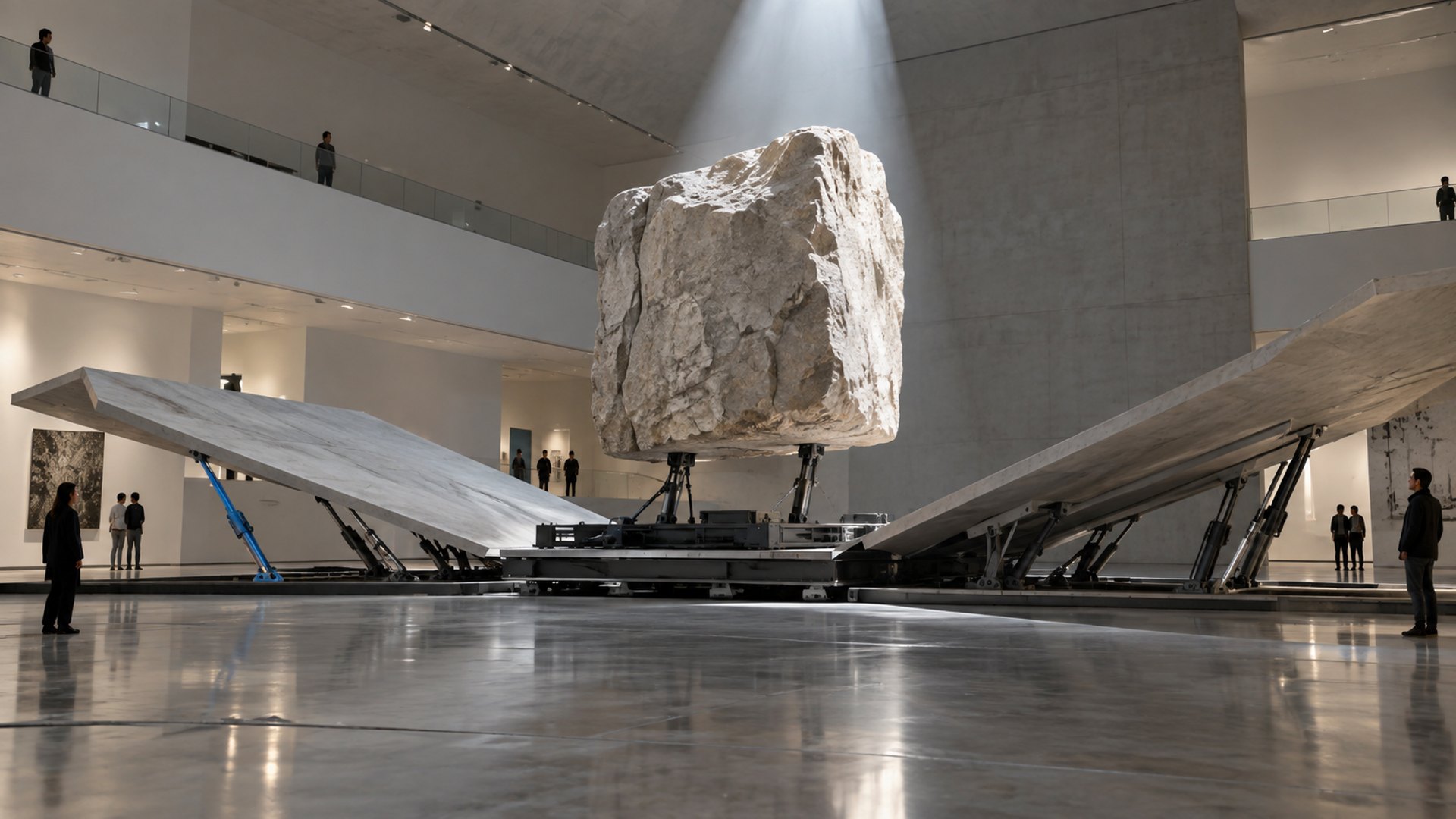
Recently, we came across Mercanti d’aura by Alessandro Dal Lago and Serena Giordano, a book that looks at contemporary art from an unusually revealing angle. Rather than explaining art through taste, beauty or talent, it treats the art world as a system and follows everything that happens around an artwork: who exhibits it, who writes about it, who authenticates it, who buys it, who places it in a collection, and who helps turn an ordinary object into something worthy of attention, prestige and money.
This is where the book becomes particularly interesting. Artistic value is not presented as something naturally embedded in an object. It is constructed. Sometimes slowly, through years of recognition and institutional support; sometimes much faster, through the intervention of a gallery, a museum, a critic, a collector, or simply a powerful narrative capable of changing the way an object is perceived.
The title refers to that very process. The “aura”, the concept famously associated with Walter Benjamin, did not disappear with photography, mechanical reproduction, or the erosion of the artwork’s material uniqueness. It simply moved elsewhere. Today, aura can reside in a signature, a provenance, an artist’s reputation, an exhibition history, the institution displaying the work, or the network of consensus built around it.
CORE · Members
Continue reading
This essay is part of CORE. Membership opens it in full, with every CORE essay, the Hypercast library and the Fakewhale AI Curator.