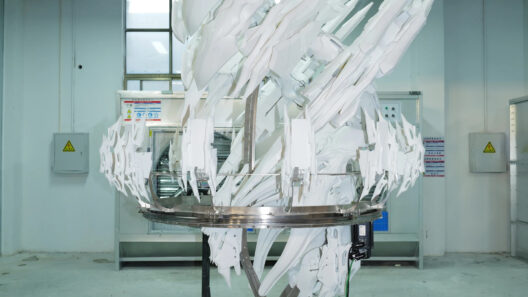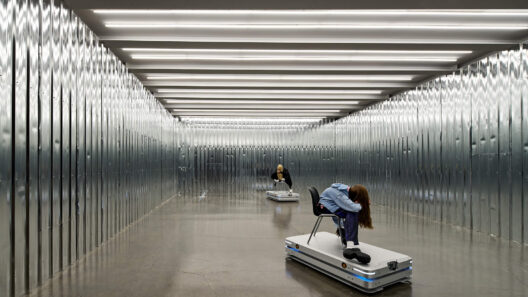
Standing in front of a sculpture by Indriķis Ģelzis, you may think you know what you are looking at, only to change your mind a few seconds later. A slender structure resembles a skeleton; from another angle, it could be an architectural model, a map or a technical device. That shift in perception is not incidental. It is one way his work encourages us to look more carefully. How much of what we see comes from the object itself, and how much from the images we already carry in our minds?
His sculptures often consist of lines, joints and surfaces that seem to follow a precise plan. Yet their intended function remains unclear. They look like structures designed to do something, but they are not tools. Rather than solving a practical problem, they make us aware of our own attempts to find meaning in what we see.
This approach has a direct connection to the artist’s background. Raised in a family of architects, Ģelzis experimented with several artistic forms before focusing on sculpture. Architecture returns in his work not as a style to imitate, but as a way of thinking: how one part supports another, how solid and empty spaces interact, and how a form changes as we move around it.
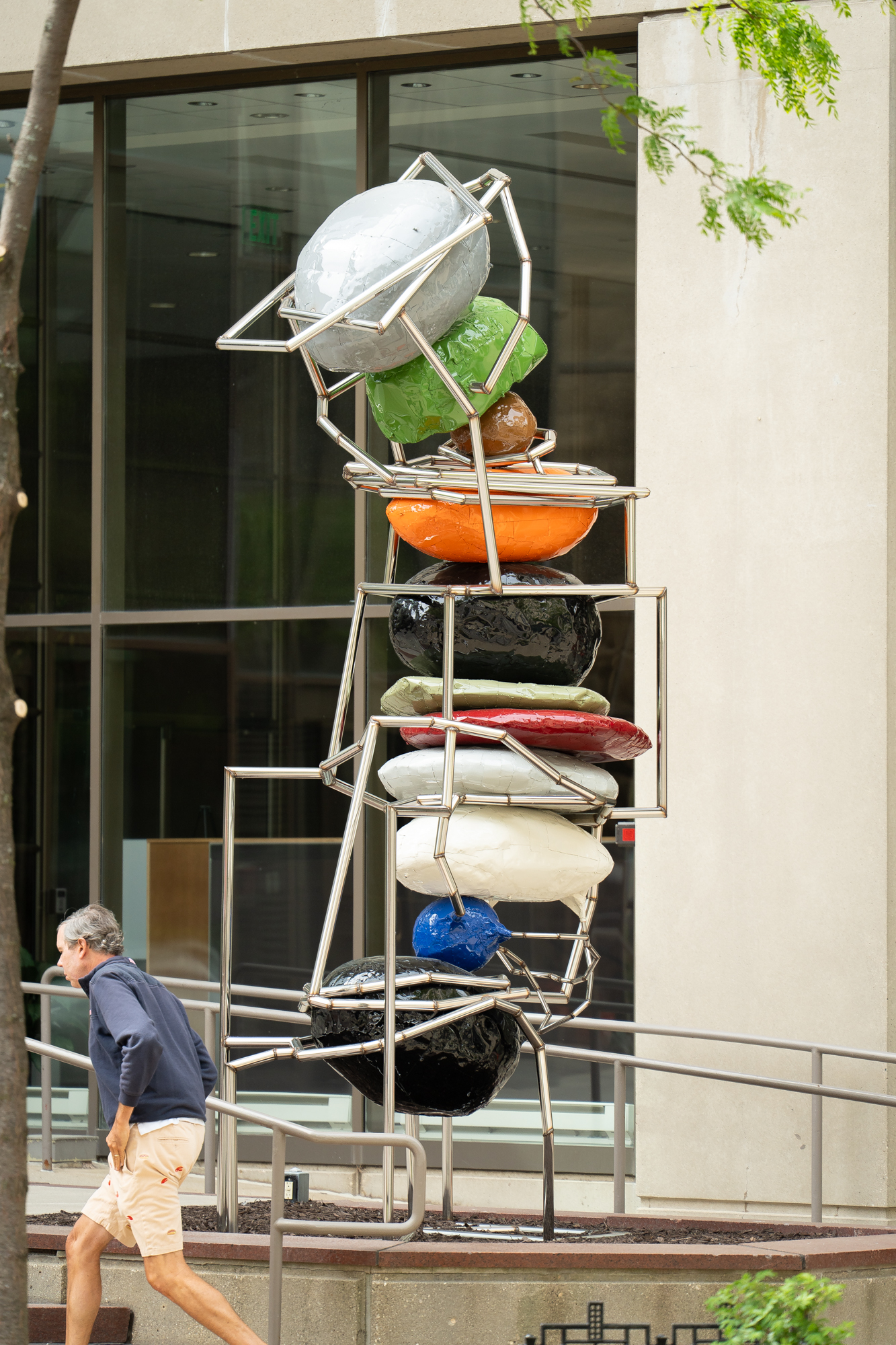
His working process offers another way into the practice. Ģelzis first develops his pieces as digital 3D models, which he can revise repeatedly. He then translates them into physical structures, often made of metal. This is more than a transition from virtual to real. It brings together two different ways of making decisions. In a digital model, a line can be moved instantly; in steel, a curve, a weld or a point of support has weight and consequences.
Why begin on a screen if the final work is a physical sculpture? Because both methods allow him to explore relationships between parts, but under different conditions. The screen offers flexibility; the material introduces resistance, scale and gravity. The finished work retains something of each. It resembles a drawing given substance, yet it also requires us to move through space to understand it.
At times, these structures resemble scientific diagrams. A diagram usually simplifies a phenomenon to make it easier to understand. Ģelzis borrows that visual clarity without providing a single explanation. We may recognise something anatomical, natural or mechanical, but none of these readings fully accounts for the work. This distinction matters: the sculpture is not hiding an answer we are supposed to guess. It opens up several ways of seeing at once.
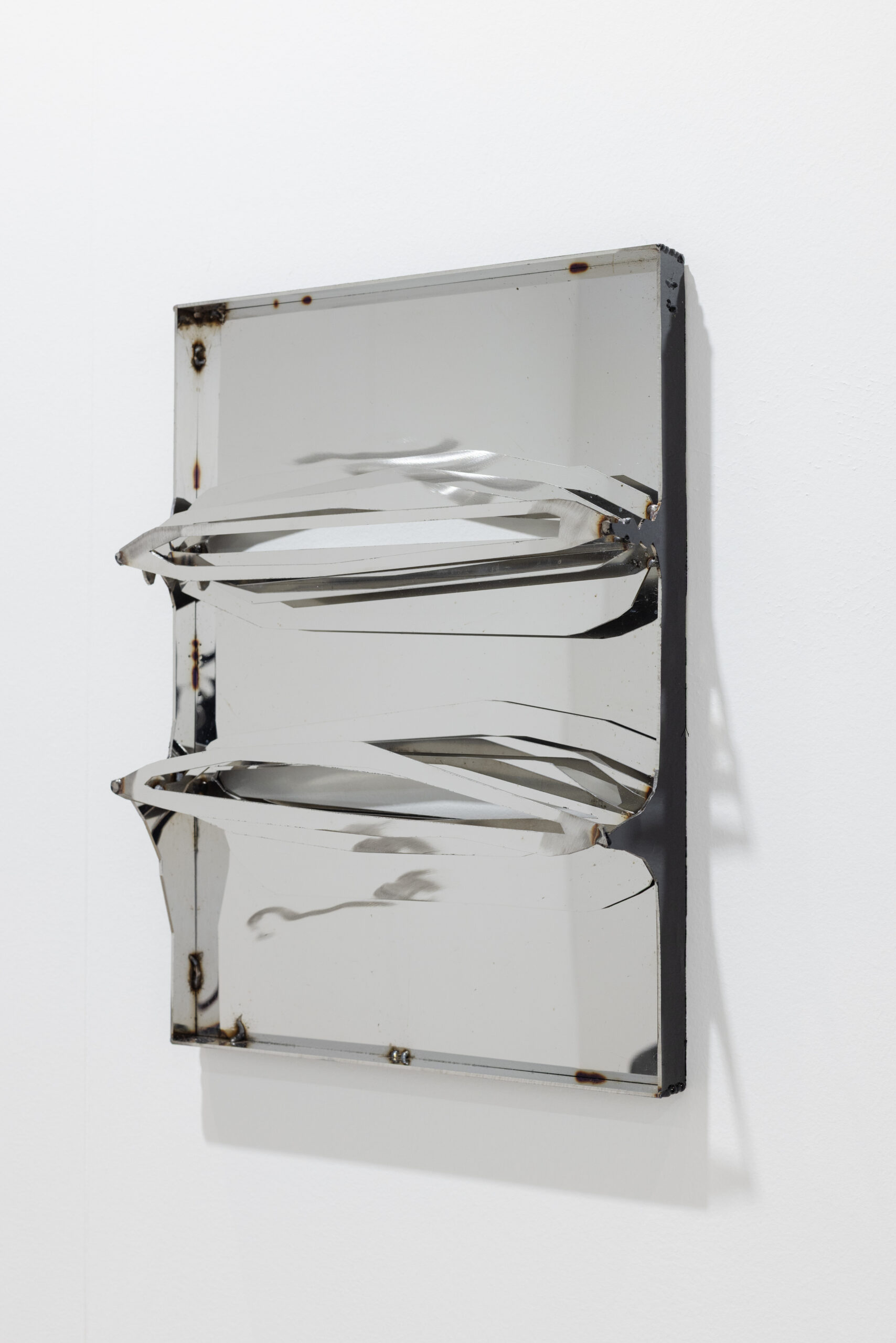
Eyelash Fortress, offers a particularly clear example. The work takes its cue from the eye and the ways it protects itself. Eyelids and eyelashes are small, familiar features we rely on without much thought. Enlarged and reimagined as sculptural structures, they begin to resemble barriers, borders or fortifications. The connection may seem unexpected, but it starts with a straightforward function: our eyes allow us to see the world, while also needing protection from it.
What does it mean to protect our gaze today? We move almost effortlessly between the room around us and the images on a screen. News, landscapes, violence and everyday life follow one another, often without a pause. The work does not simply argue that technology is the problem. Instead, it asks us to consider the distance between everything we can see and what we can actually process. The eyelid becomes a simple, tangible way of thinking about attention, exposure and limits.
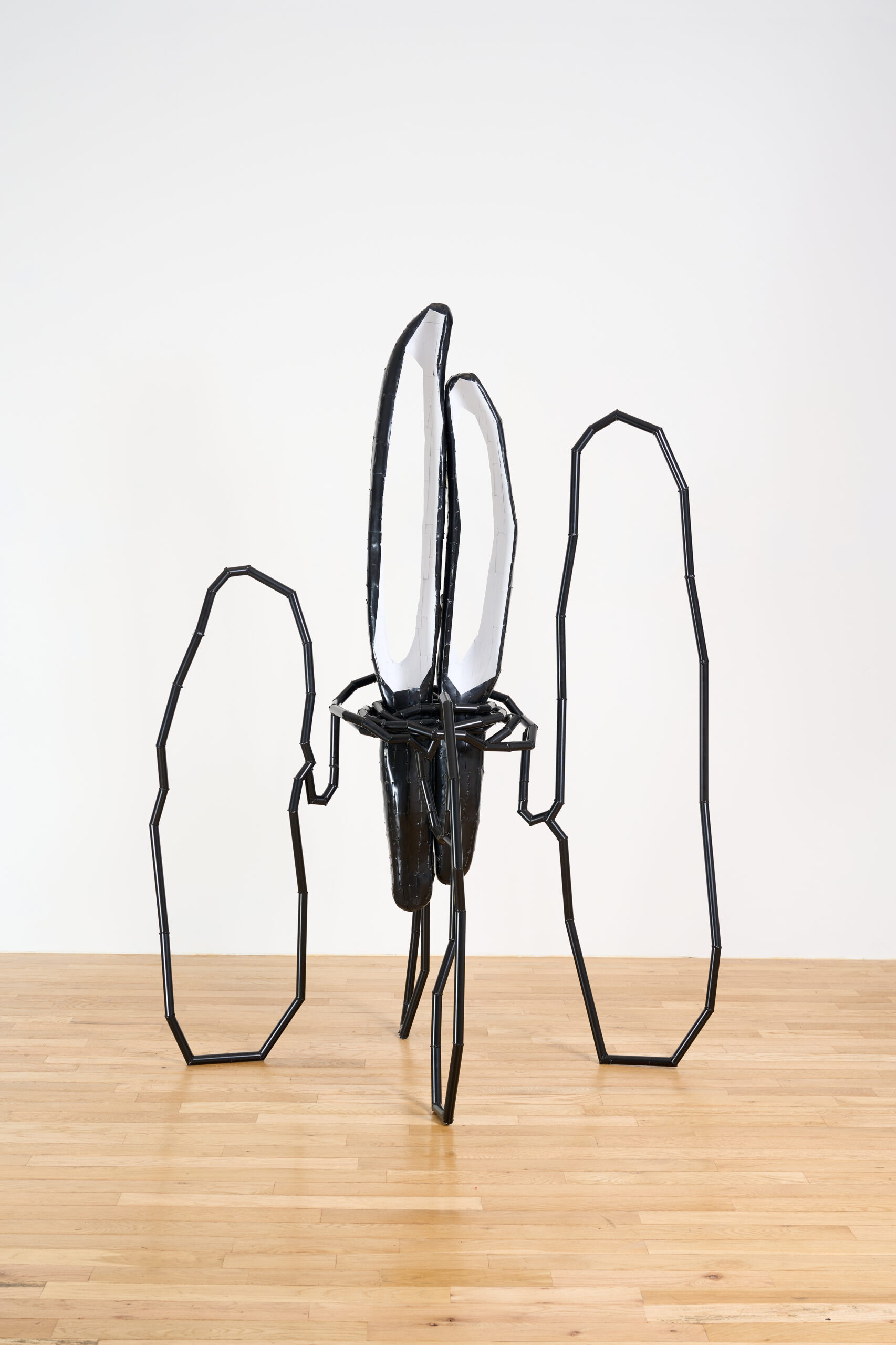
In Gaze Grows Bones, the relationship between vision and the body takes a different direction. Eye-like forms connect to a structure that recalls a spine. Looking appears to involve the body’s physical support as well as its sight. We need not read this literally. What matters is the association: what we see can affect our posture, our movements and the way we respond to our surroundings. The sculpture gives this relationship a physical form without turning it into a straightforward illustration.
Scale is essential here. A form that looks small on a screen may stand at the height of a person in an exhibition space. To take it in, we have to approach, step back and change position. We are not simply looking at an image; we are encountering an object and the space it occupies.
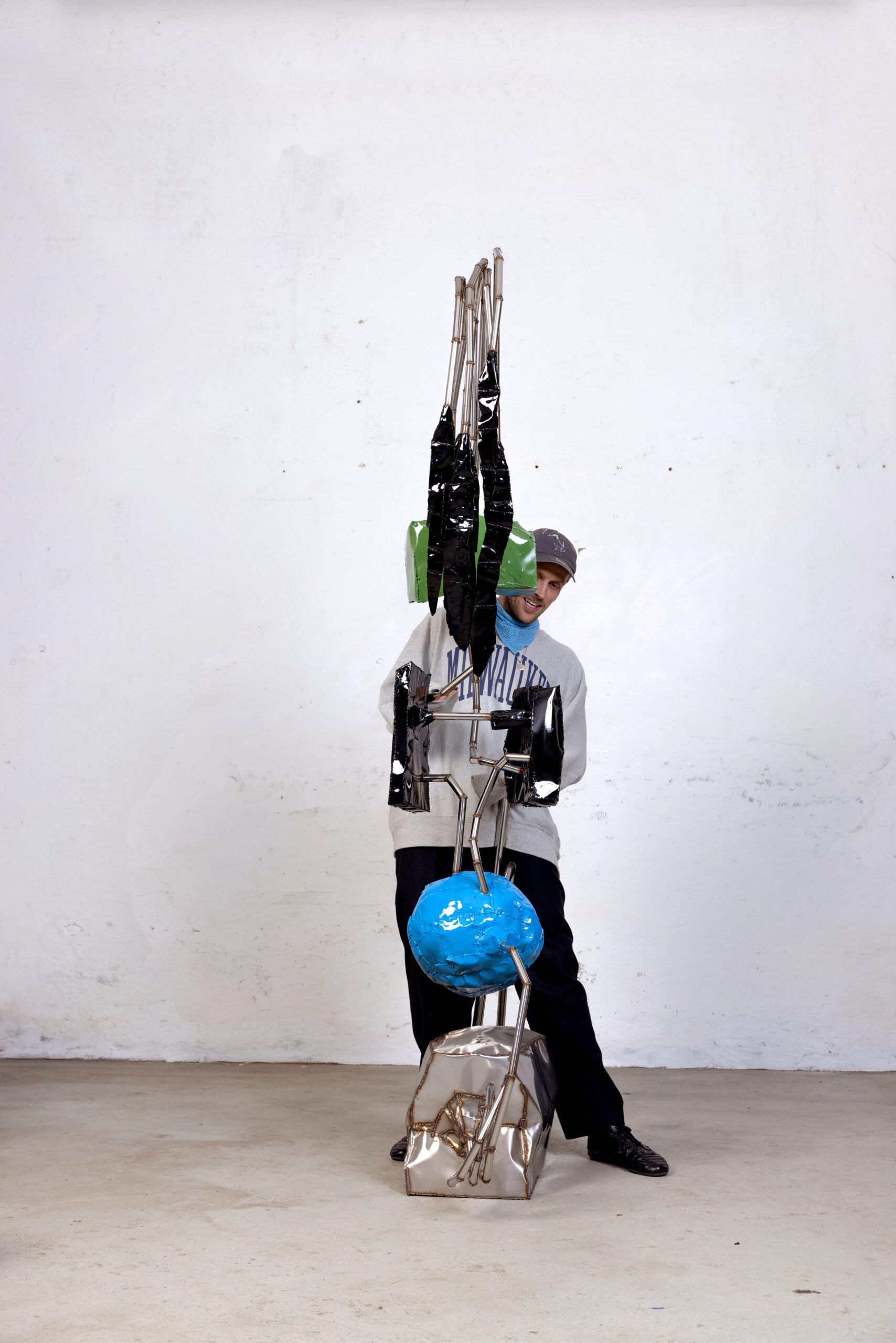
In works associated with Time Camouflage, reflective surfaces make the surrounding environment even more present. Light, architecture and the movements of viewers continually alter what appears on the sculpture. This does not mean the work lacks a defined form. It means that form alone cannot determine our experience of it. The circumstances of the encounter matter too.
Time also enters Ģelzis’s practice through installations involving light, movement or sound, such as Watery Day’s Eye. These works cannot be taken in at a glance. We need to stay, wait and notice what changes. They offer a direct reminder that looking is not the same as quickly registering an image.
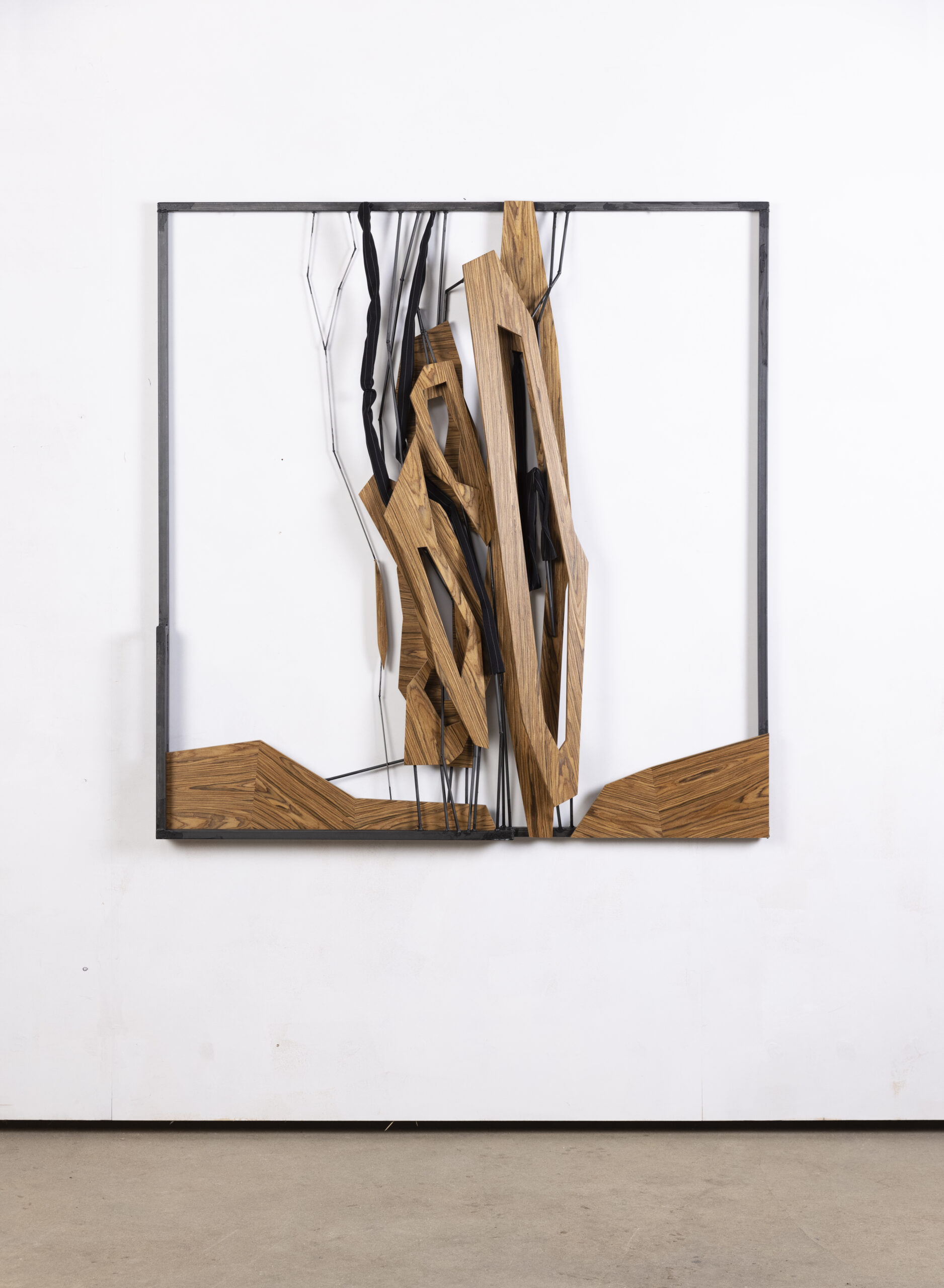
There is also a less immediately visible dimension to the work: personal memory. In Night Flame, the image of fire meets anatomical forms and memories connected to the artist’s landscape and family history. The piece shows how a work can begin with a visual idea and acquire emotional significance through the process of making it. An artist does not always start with a fully formed message. Sometimes making something is how they discover what they are trying to understand.
What connects these works? Not one overarching subject, but a consistent method. Ģelzis notices similarities between things we usually keep separate: a bone and a supporting structure, an eyelash and a barrier, a digital model and an organism. He then turns those connections into objects we can encounter physically. The results do not erase the differences between nature, the body and technology. Instead, they show how often these categories overlap in the way we interpret the world.
This is where his practice becomes relevant to wider conversations in contemporary art. So much of everyday life is now mediated through images, data and interfaces. Ģelzis brings these ways of organising experience back to the scale of the body and the space around it. His sculptures do not tell us what to think about the present. They draw attention to how active — and how far from neutral — our way of looking really is.
Ultimately, his work makes a simple but useful proposition: recognising something is not the same as fully understanding it. We can approach a sculpture with one impression, test it and then revise it. That modest exercise has value beyond the gallery. It reminds us that looking closely takes time, and that sometimes a well-placed question is more productive than an immediate answer.
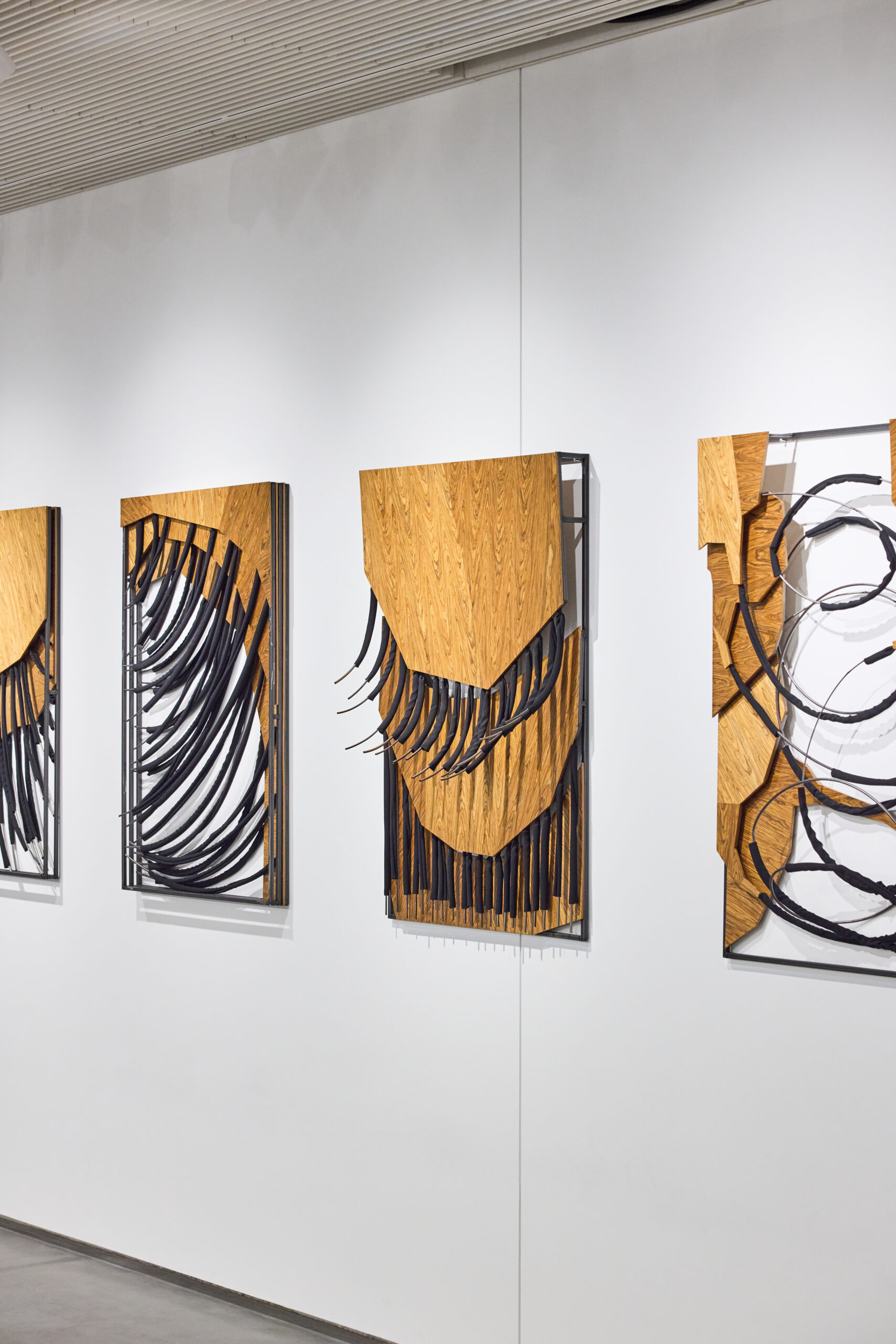
There is also a less immediately visible dimension to the work: personal memory. In Night Flame, the image of fire meets anatomical forms and memories connected to the artist’s landscape and family history. The piece shows how a work can begin with a visual idea and acquire emotional significance through the process of making it. An artist does not always start with a fully formed message. Sometimes making something is how they discover what they are trying to understand.
What connects these works? Not one overarching subject, but a consistent method. Ģelzis notices similarities between things we usually keep separate: a bone and a supporting structure, an eyelash and a barrier, a digital model and an organism. He then turns those connections into objects we can encounter physically. The results do not erase the differences between nature, the body and technology. Instead, they show how often these categories overlap in the way we interpret the world.
This is where his practice becomes relevant to wider conversations in contemporary art. So much of everyday life is now mediated through images, data and interfaces. Ģelzis brings these ways of organising experience back to the scale of the body and the space around it. His sculptures do not tell us what to think about the present. They draw attention to how active, and how far from neutral, our way of looking really is.
Ultimately, his work makes a simple but useful proposition: recognising something is not the same as fully understanding it. We can approach a sculpture with one impression, test it and then revise it. That modest exercise has value beyond the gallery. It reminds us that looking closely takes time, and that sometimes a well-placed question is more productive than an immediate answer.