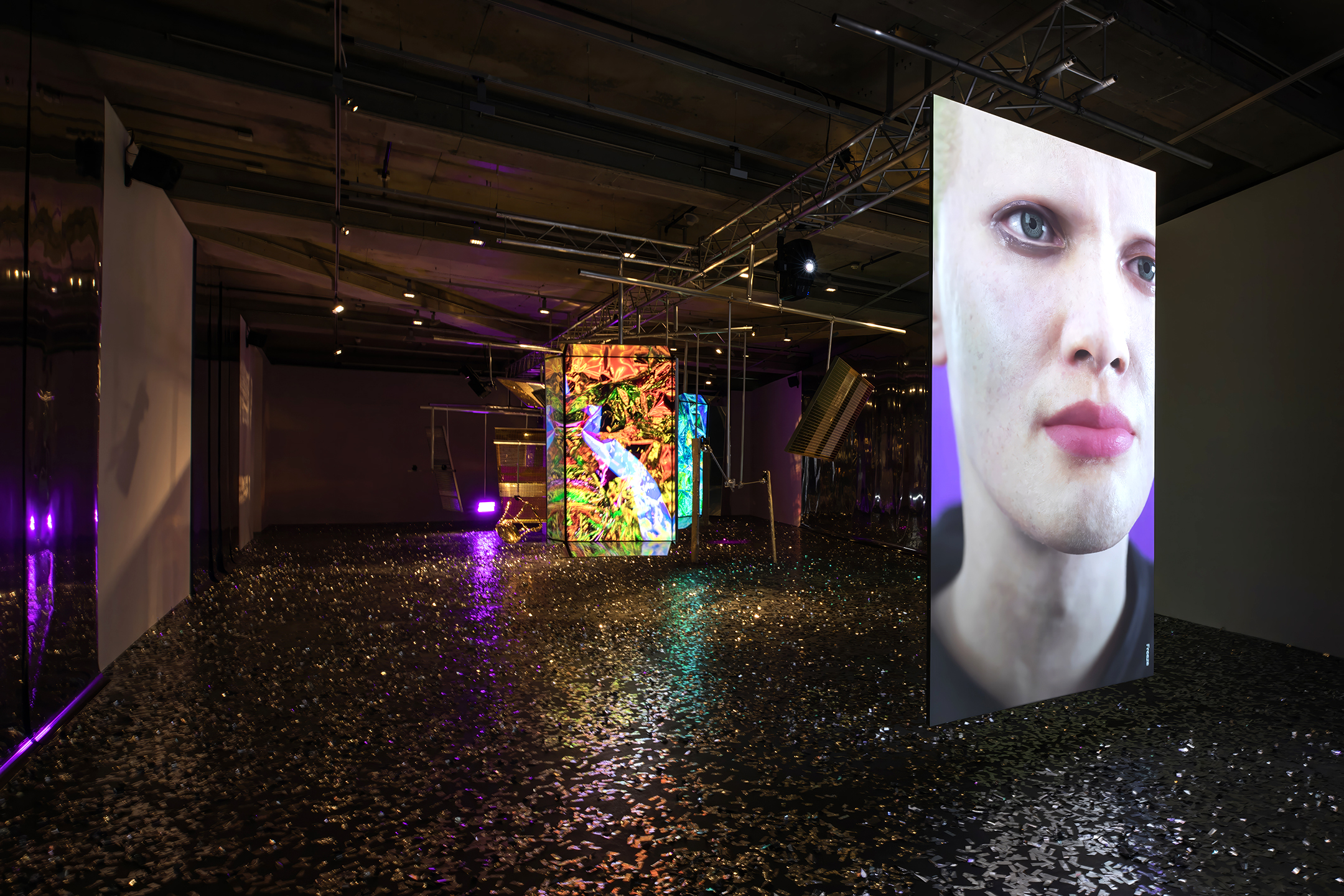
A mirrored surface, flashing lights, a room filled with confetti. The visual language is immediately familiar: nightlife, luxury, entertainment, celebration. Yet beneath this seductive atmosphere lies a peculiar sense of unease. The party appears to continue independently of those attending it, as though pleasure has become a mechanism capable of operating without human participation. The signs of enjoyment remain intact, even as the experience they promise begins to lose its meaning.
This tension between attraction and discomfort runs through the work of , the artistic partnership of Yasemin Baydar and Birol Demir. Moving between installation, sculpture, moving image, performance and digital environments, the duo has developed a distinctive visual language that appropriates the aesthetics of contemporary consumer culture while exposing the psychological and social structures embedded within them.
Rather than positioning themselves outside the systems they examine, operates from within their seductive logic. Reflective surfaces, artificial light, glitter, technological devices and digitally constructed identities become instruments through which desire, perception and behaviour are investigated. Their work does not simply condemn the superficiality of contemporary culture. It reveals how profoundly its mechanisms have become integrated into everyday experience.
The resulting environments are simultaneously inviting and disorienting. Their visual appeal is inseparable from the discomfort they produce. What initially appears decorative gradually reveals itself as a system of expectations, gestures and conditioned responses. The spectator becomes more than an observer, occupying an active position within the very structures the artwork brings into focus.
In Paradise on Sale (2023), presented at Dirimart, transformed the familiar machinery of entertainment into an immersive environment. Suspended structures, mirrored confetti, strobe lighting, reflective objects and the scent of champagne constructed the atmosphere of an ongoing celebration. Every element seemed to promise excitement, abundance and collective enjoyment.
Yet the installation was less concerned with producing pleasure than with examining the conditions through which pleasure is manufactured and recognised. Its carefully assembled environment reproduced the visual codes of celebration while subtly destabilising their meaning. The space encouraged familiar behaviours: looking, photographing, sharing and participating in the spectacle.
Through this process, entertainment emerged as more than an isolated cultural activity. It became a model for the organisation of contemporary experience, influencing how individuals communicate, construct identities and respond to the world around them.
Central to this investigation is the artists’ notion of the hyper-now, a condition in which physical and virtual realities overlap continuously, collapsing distinctions between information, desire, consumption and experience.
Within this accelerated present, a private message, a news alert, an advertisement and an image of catastrophe can appear in immediate succession, mediated through the same interface. Their meanings remain fundamentally different, yet their presentation subjects them to an increasingly uniform visual and temporal logic.
translates this compression into spatial experience. The density of stimuli, the persistence of visual attraction and the difficulty of establishing distance reproduce the conditions of a culture organised around permanent stimulation. Their installations render this saturation tangible, making the viewer physically encounter the mechanisms through which attention is captured and maintained.
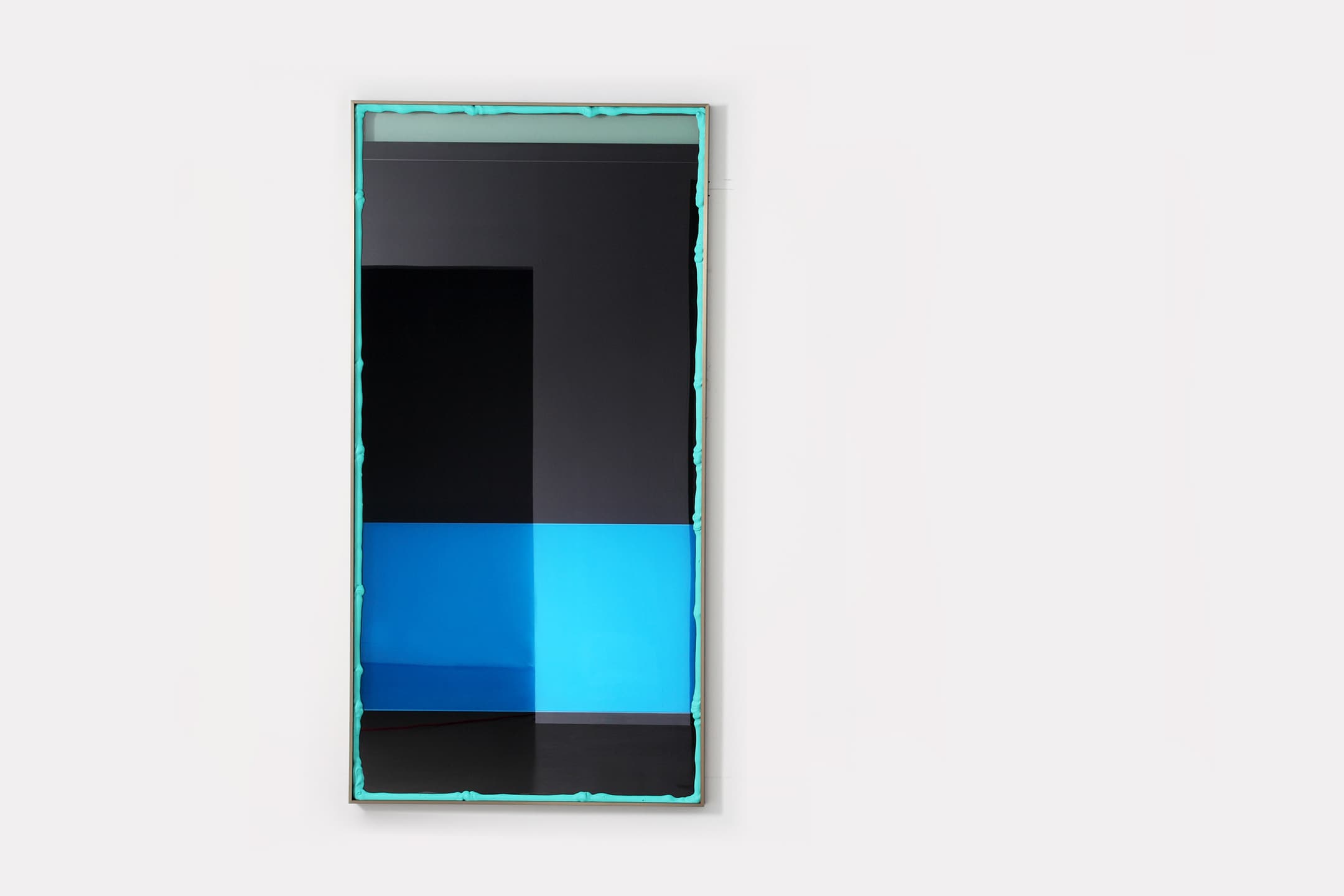
The investigation of perception extends into the duo’s Faker series, initiated in 2009. Here, glass and reflection assume functions traditionally associated with painting, challenging the stability of the image and its relationship to the surrounding environment.
Rather than presenting a self-contained composition, these works incorporate their immediate context. The object, the exhibition space and the spectator’s reflection coexist within a shifting visual field. The image is never entirely autonomous; it is continuously reconstructed through the conditions of its observation.
This approach acquires particular relevance within a culture increasingly mediated by digital interfaces. Contemporary technological systems often conceal complex processes behind smooth, seemingly transparent surfaces. Visual clarity becomes an instrument of simplification, offering the impression of direct access while obscuring the mechanisms that organise what can be seen.
In ‘s work, reflection operates through a similar ambiguity. The surface reveals and conceals simultaneously, drawing the spectator into an image whose apparent accessibility resists stable interpretation.
Importantly, the duo does not attempt to reject the visual strategies it examines. Neon, polished finishes, seductive compositions and digital characters remain central to its artistic vocabulary. The works participate in the aesthetics of attraction even as they expose its underlying contradictions.
This proximity between critique and complicity is fundamental to the practice. The possibility that an artwork might be consumed as another desirable image is not an incidental risk, but part of the conceptual tension through which it operates.
A different manifestation of this tension emerges in Bitter Medicine #02, reactivated at Borusan Contemporary in 2020 during the pandemic.
The installation involved eight modified robotic vacuum cleaners circulating through the closed museum, scattering glitter instead of collecting dust. Their movements were transmitted online continuously, transforming an empty exhibition space into an ongoing spectacle performed by machines.
The reversal of the robots’ intended function introduced an immediate element of absurdity. Devices designed to maintain order became agents of disorder, endlessly producing the very conditions they were originally engineered to eliminate.
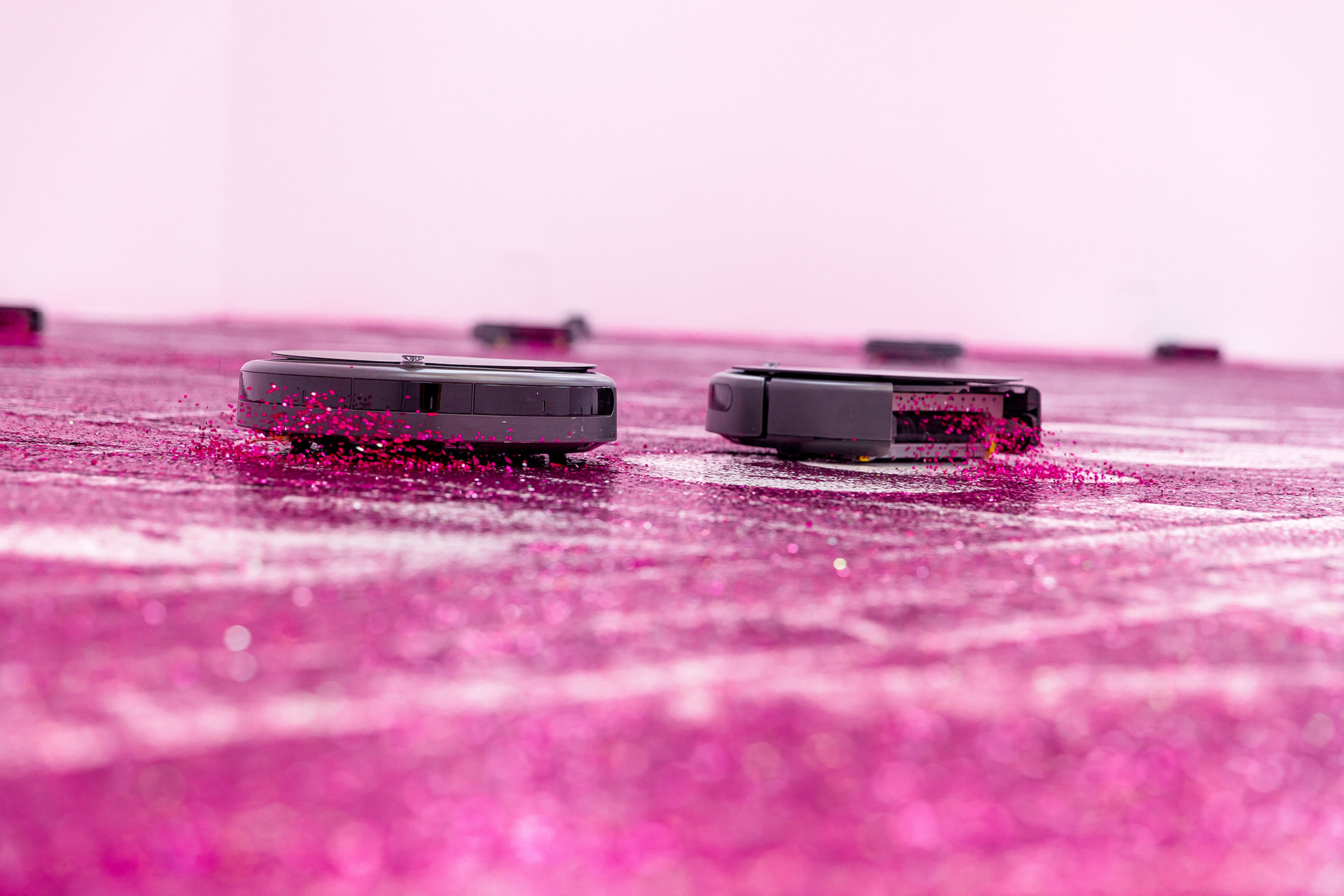
Beyond this functional contradiction, the work explored the emotional relationships that emerge between humans and technological systems.
The repetitive movements of the robots, their unpredictable trajectories and their apparent persistence encouraged viewers to attribute human qualities to mechanical behaviour. Clumsiness, determination and even loneliness became possible interpretations of actions generated without emotional intention.
The installation exposed the extent to which human perception constructs narratives around nonhuman activity. Emotional identification does not necessarily depend on the presence of consciousness in the observed subject. It can arise through movement, repetition and the projection of meaning.
At a moment when digital systems increasingly simulate social interaction and human expression, this observation becomes particularly significant. Rather than presenting machines as emerging equivalents of human beings, examines the mechanisms through which human feeling becomes attached to technological behaviour.
The work’s quiet absurdity also reflects a broader condition of contemporary production: activity continuing indefinitely, detached from a clearly defined purpose. The robots remain occupied, the broadcast remains active and the spectacle persists, even in the absence of an audience physically present to experience it.
Time constitutes another recurring material in the duo’s investigations.
In Every Now (2025), the familiar structure of the clock is transformed into an unstable apparatus. Intersecting faces and independently moving hands accelerate, hesitate and reverse, accompanied by sound. An instrument traditionally associated with the orderly measurement of time becomes an expression of temporal uncertainty.
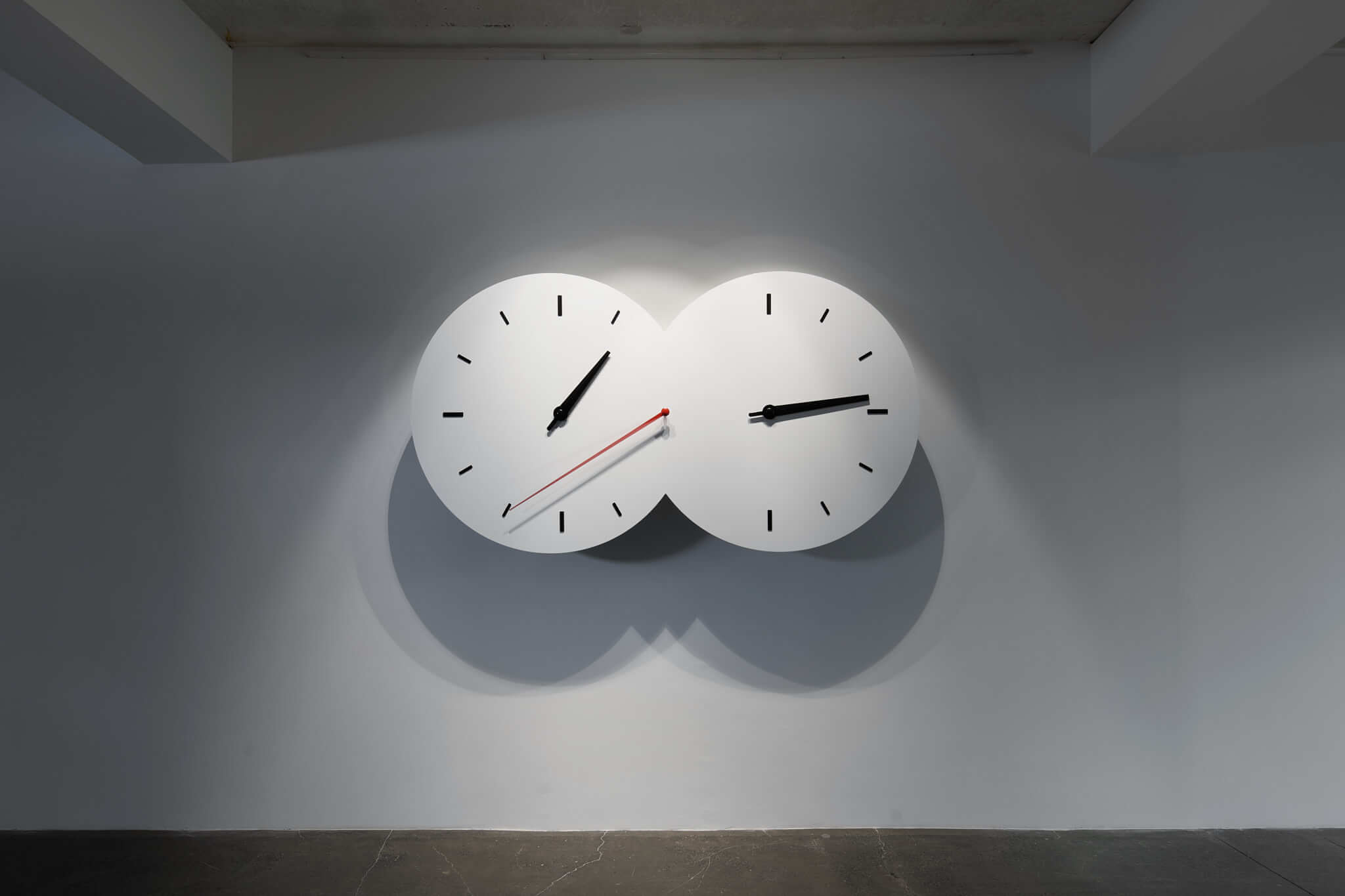
The work shifts attention from chronological time to its subjective experience. Within an environment defined by continuous updates, simultaneous demands and accelerated communication, time becomes increasingly fragmented. The accumulation of activity no longer guarantees a corresponding sense of development or progress.
Through its disrupted movements, Every Now gives visual form to this contradiction. Time appears both excessively occupied and strangely emptied of continuity.
The installation also introduces a political dimension to the organisation of attention. Digital platforms and contemporary communication systems operate through increasingly sophisticated mechanisms designed to sustain engagement. The management of attention consequently becomes inseparable from the management of time.
Rather than illustrating these dynamics through explanatory information, makes acceleration and repetition directly perceptible. The viewer encounters the instability of temporal experience as a physical and psychological condition.
The relationship between technological mediation and human behaviour takes another form in Lunatic Poets (2025), developed using Unreal Engine 5.
Populated by synthetic figures whose gestures and emotional expressions emerge from a longer archive of writing and digital production, the work investigates the construction of identity within increasingly artificial environments.
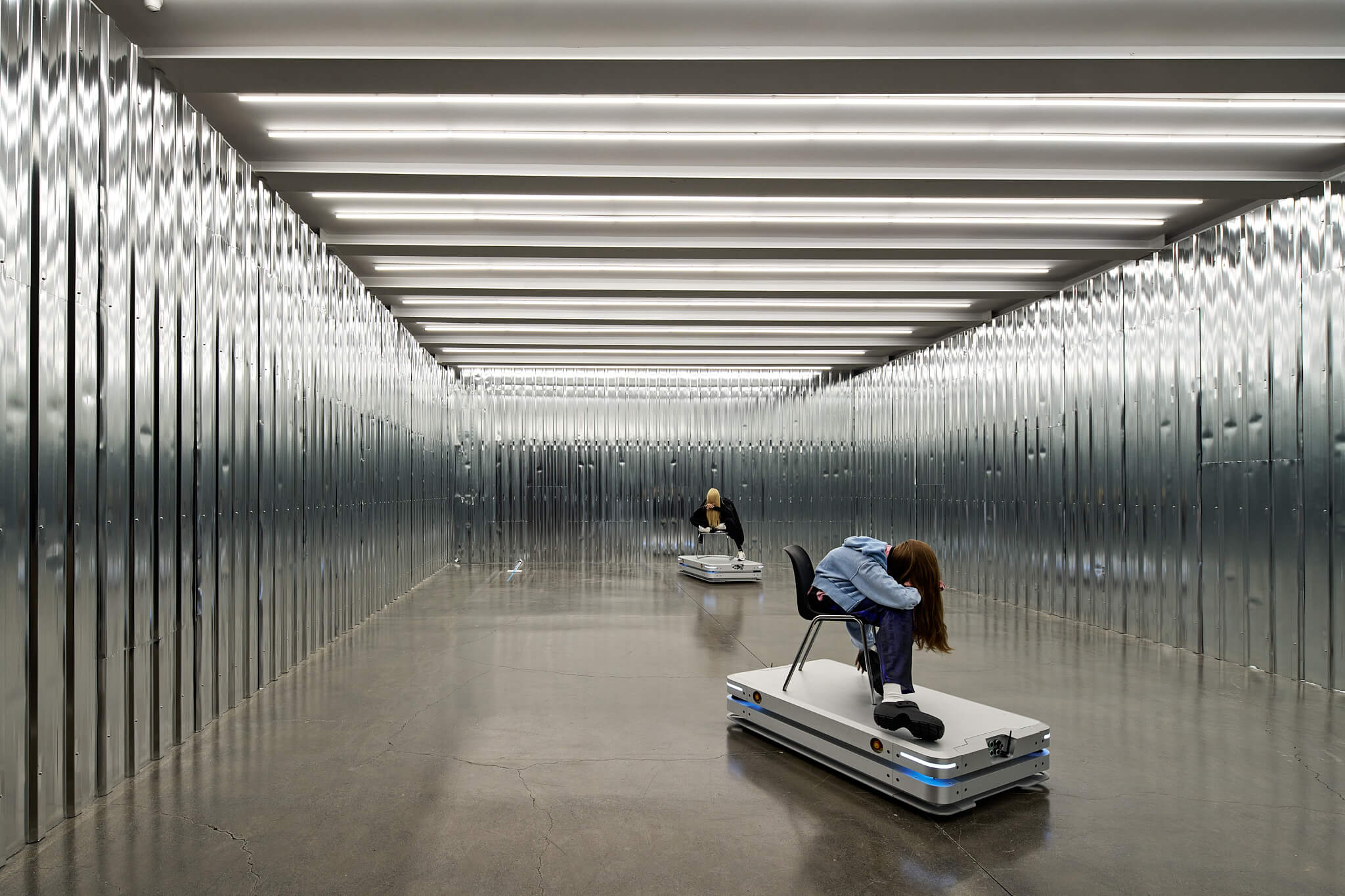
Related concerns extend into the Profile Series, where sculptural figures, including bodies mounted on robotic platforms, perform programmed movements, turns and hesitations.
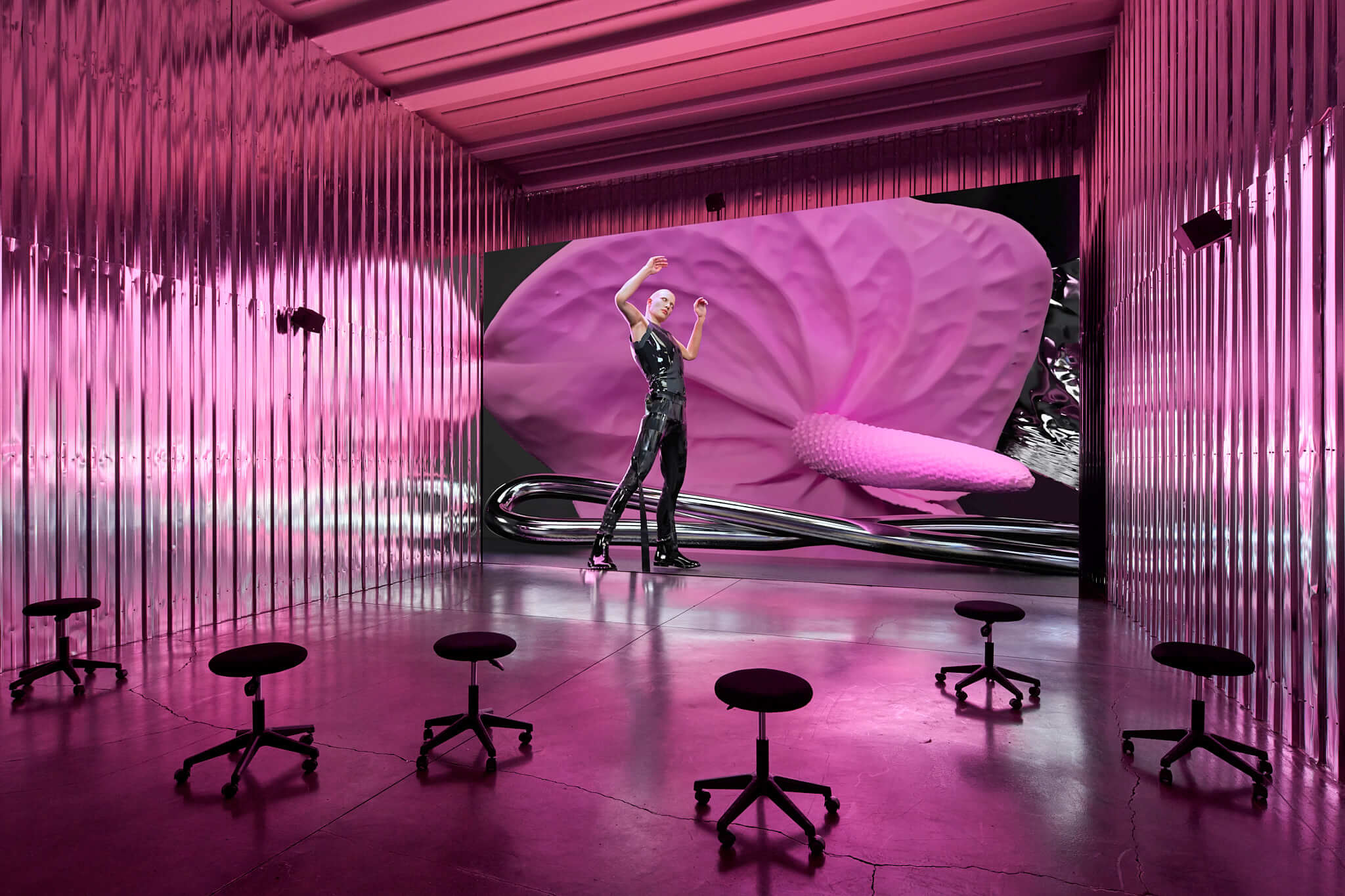
These works translate the logic of the digital profile into physical and simulated bodies. Identity appears not as a stable interior condition, but as something continuously assembled through gestures, appearances and external observation.
The artificial figures mirror processes already embedded in ordinary social behaviour. Expressions are selected, images curated, gestures repeated and reactions measured. In networked environments, the presentation of the self increasingly develops through an awareness of its potential audience.
Within this context, the synthetic body does not function merely as a speculative image of a technologically transformed future. It becomes an exaggerated reflection of existing practices through which identity is produced, performed and evaluated.
The distinction between authentic and artificial behaviour consequently becomes less secure. The programmed movements of the figures expose the degree to which human conduct is itself shaped by conventions, expectations and systems of visibility.
Their significance lies not simply in the technical sophistication of their construction, but in the uncomfortable familiarity of their actions.
Across more than a decade of artistic production, has developed a practice defined by the continuous negotiation between pleasure and control, visibility and concealment, technological mediation and human experience.
The diversity of media employed by the duo reflects a consistent conceptual investigation rather than a sequence of unrelated formal experiments. Whether through a room filled with confetti, a reflective painting, a malfunctioning clock or a robot scattering glitter, the works examine the systems that organise contemporary desire, emotion and attention.
Their distinctive contribution lies in refusing to establish a comfortable separation between the individual and the structures that influence individual behaviour. The spectator is neither an innocent observer nor simply a victim of external manipulation. Participation, attraction and complicity remain inseparable from the experience of the work.
This position also distinguishes from more conventional forms of institutional or political critique. Rather than communicating a predetermined argument through symbolic representation, the artists construct situations in which the mechanisms under examination become operative.
The installation functions as an environment to be inhabited, not merely an object to be interpreted. The aesthetic experience becomes the means through which its own conditions are investigated.
Within this framework, beauty is not a distraction from critical thought, and pleasure is not necessarily its opposite. Both can become mechanisms through which power operates, identities are shaped and attention is organised.
The work of ultimately reflects a contemporary condition in which the distinction between spontaneous desire and constructed expectation has become increasingly difficult to identify. Its environments reveal how deeply the language of entertainment, consumption and technological interaction has penetrated the structures of everyday life.
The glitter continues to fall, the machines continue to move and the images continue to circulate. What remains unresolved is the extent to which the desire to participate originates within the individual, or has already been anticipated and organised by the systems that make participation possible.