It’s no longer a matter of visibility.
The images are already here. Everywhere. At every moment.
We don’t need to seek them out, they find us. They pass through us, slip into the gaps of our attention, strike the retina, overlap, are forgotten. Art, video art, design, politics, advertising, pain, entertainment. Everything presents itself in the same place: the horizontal, infinite, indifferent space of the feed.
And so, the artist no longer exhibits. They publish.
They share the image of their work knowing, deep down, it won’t truly be seen. They know it will be scrolled past. They know it will appear somewhere between a dance clip and a tragedy, between a meme and a sponsored post. They know that even if the work is important, necessary, intense, it will still be absorbed into the visual noise, reduced to mere content.
And yet, they do it. Because the alternative is to disappear. Because attention is now bought by the second. Because today, a work can be both powerful and irrelevant in the same instant.
We live in a paradoxical form of overexposure.
Seeing has become automatic, but no longer implies engagement. The images are present, but create no friction. They do not disturb, do not pierce, do not compel. Trauma is aestheticized. Disaster is carefully edited. The artwork is optimized to look good within the vertical 4:5 format of the new Instagram feed. Complexity flattens. Depth contracts.
At Fakewhale, we have been questioning this very condition for some time.
We feel the urgency to ask a fundamental question that cuts through the heart of contemporary visual culture:
What is the relationship between art, reproduction, and digitalization today?
How are these dynamics not only reshaping the ways images are produced and circulated, but more crucially, how they are perceived, archived, neutralized, or dissolved.
What was once rare is now readily available.
What was once context has become surface.
Art is not lacking. It is everywhere. And precisely because of that, it has become invisible.
Anesthesia is not silence. It is excess.
It is the accumulation of stimuli that no longer reach a sensitive threshold. The image is not less intense. It is less anticipated. It comes after everything: after the gesture of opening an app, after the movement of a thumb, after an algorithm has decided when, how much, and to whom it will be shown.
In the present, indifference is not disinterest. It is form.
A psychological and cultural form that protects us from overload. That distances us from anything that might otherwise affect us. A strategy of visual survival. Because when everything carries the same urgency, nothing requires understanding anymore.
Thus, even great art appears like a notification.
Like something that shows up, but leaves no imprint.
Like one voice among many.
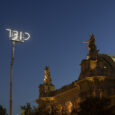
Like a light that doesn’t pierce the night, but flickers briefly,
and then disappears.
CORE · Members
Continue reading
This essay is part of CORE. Membership opens it in full, with every CORE essay, the Hypercast library and the Fakewhale AI Curator.