Entering a video game means accepting a fairly simple arrangement: we can move around, choose a direction and sometimes change a character’s fate. But our options are not unlimited. Someone has designed the space, decided which doors will open and which actions will have consequences. Even when we feel free, we are operating within a set of rules. This familiar experience offers a useful way into 00 Zhang’s work.
Born in Zhejiang and based in London, 00 Zhang works across sculpture, installation, CGI animation and interactive video games. These forms may initially seem quite different. For the artist, however, they belong to a shared environment in which objects, images, sounds and people affect one another. Her interest is not simply in telling stories about imaginary worlds, but in asking how a world is built and what happens to those who inhabit it.
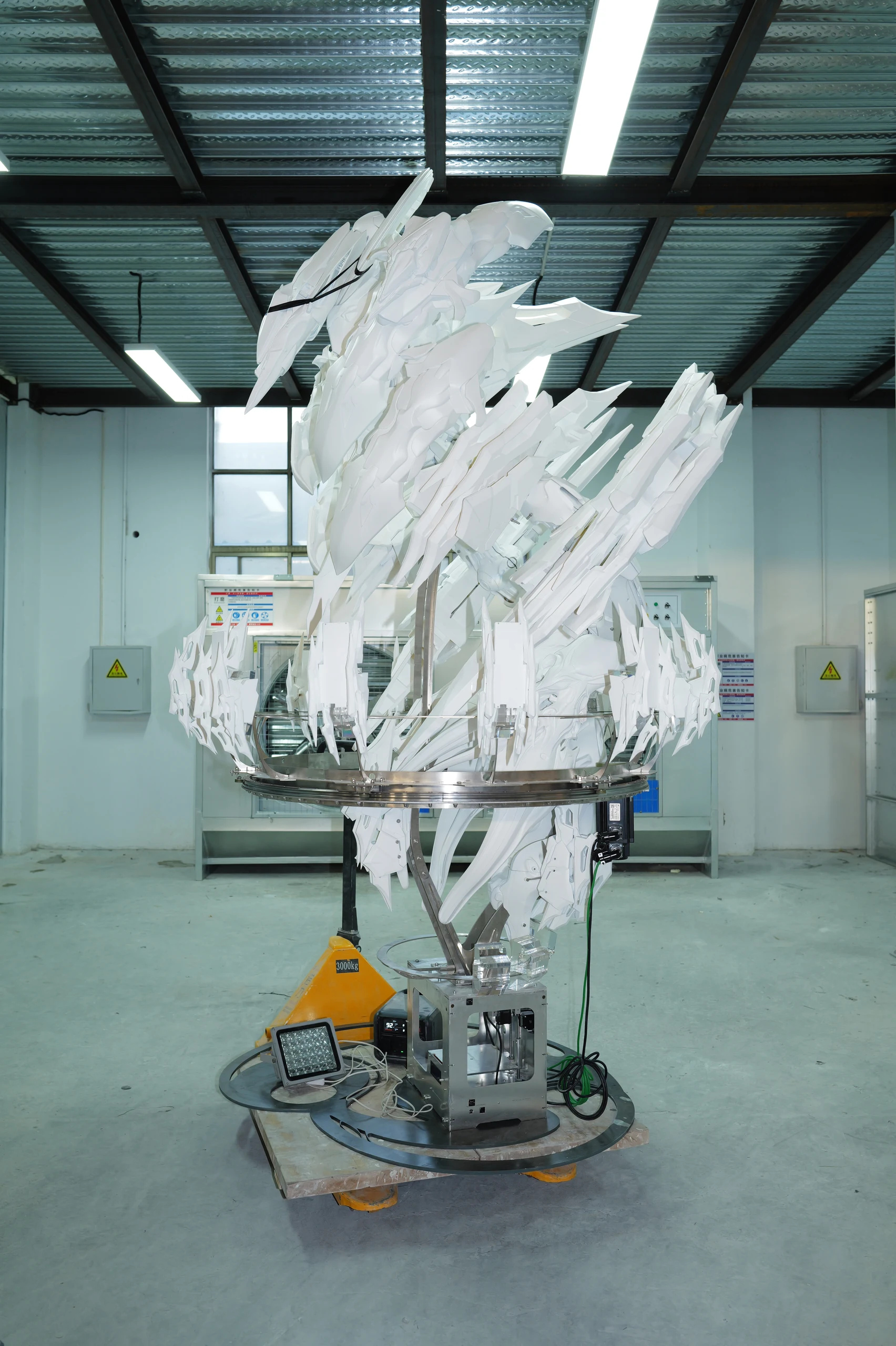
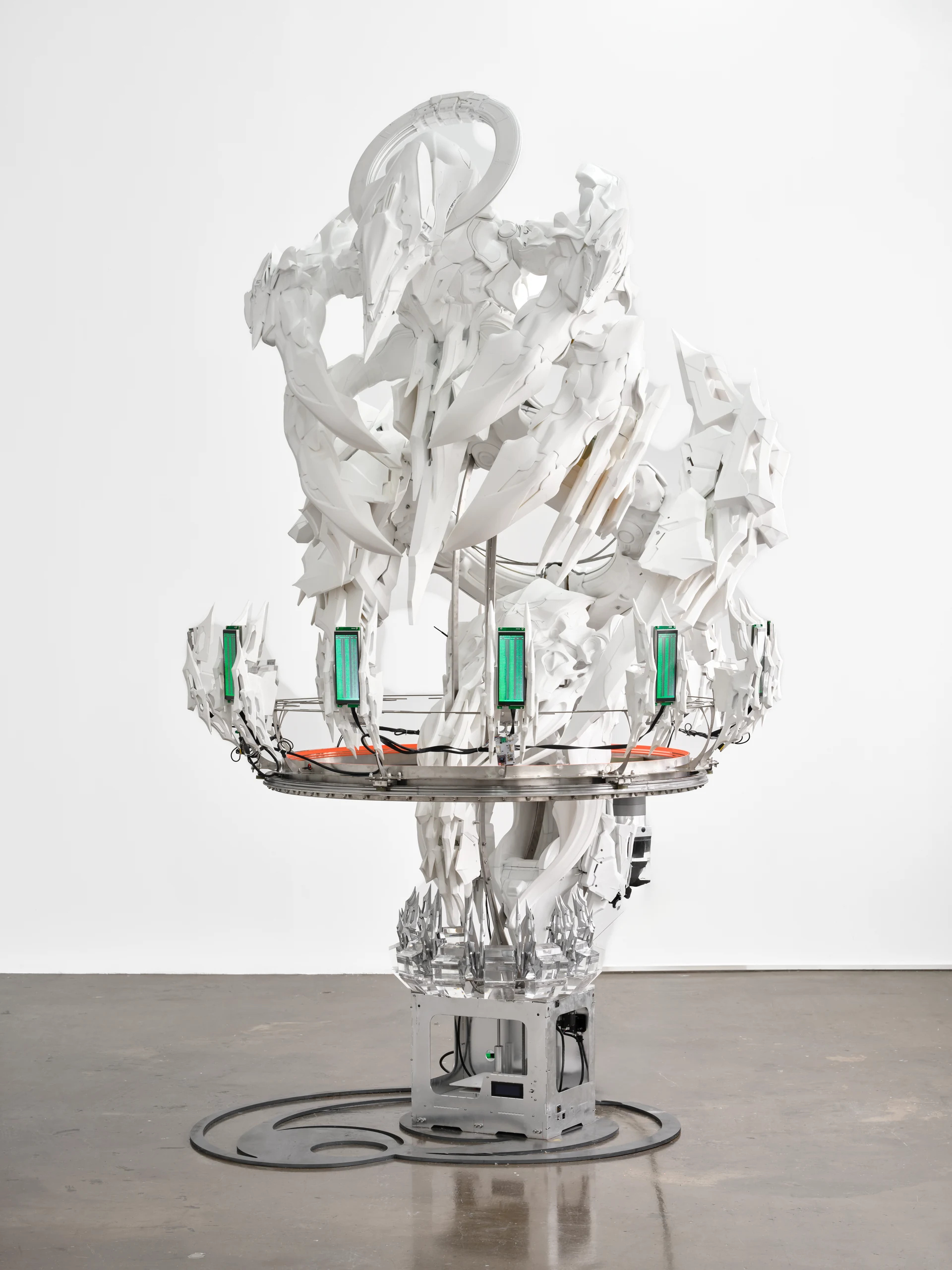
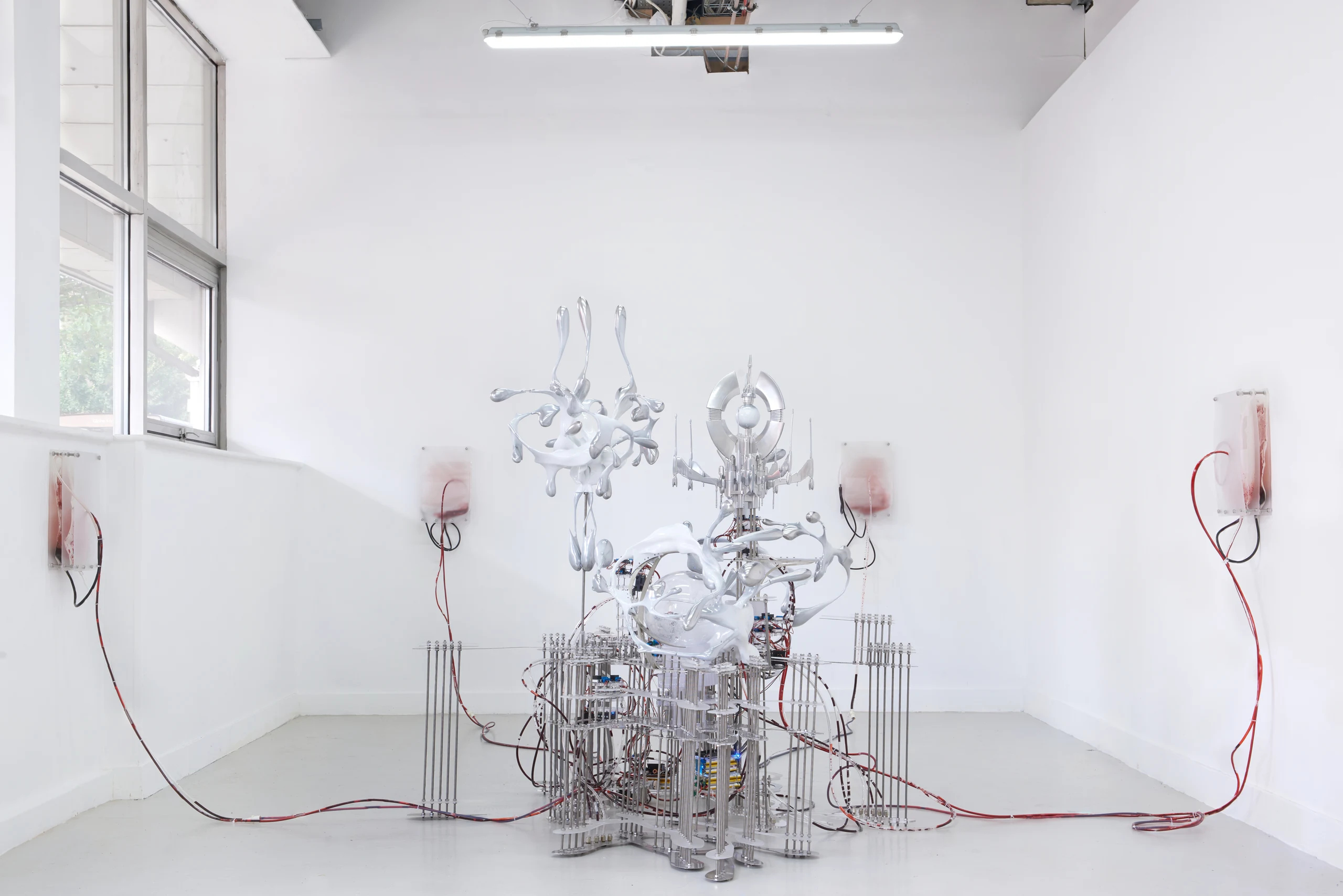
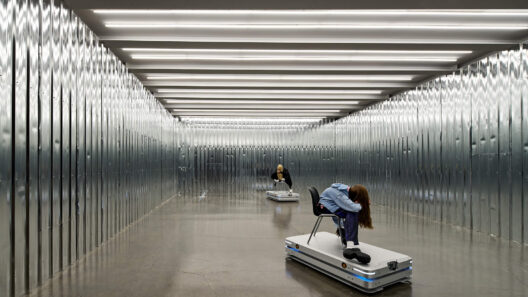
Replica 002 Catalyst, 2026 00 Zhang 167*190*280cm Acrylic, resin,Plexiglas, serial display, cement,fiberglass, busbar, electric motor, gear reducer, conductor rail, carbon brush, controller, sliding rail, stainless steel, counter Studio view Photo credit: Lexi Sun
The Overture of Prototype Series provides one example. The journey begins in a landscape inspired by East London, then uses game mechanics to lead players into realities governed by different rules. Zhang calls them ‘planes’: not merely places, but systems in which time, matter and even perception work differently. In one, The One, the prevailing order is so deeply embedded that it seems like the only possible one. In another, The Zone, a city appears and disappears in cycles tied to a collective consciousness.
Why invent these alternative realities? Because they make visible something we often overlook in everyday life: much of what we take for granted has been constructed. Institutions, hierarchies and the categories through which we describe people are not laws of nature. They are systems established over time. A video game can bring this into focus by making visitors experience a set of rules rather than simply read about it.
This also shapes Zhang’s approach to identity. She uses the phrase ‘double-sided exile’ to describe the feeling of belonging to more than one place while never fully coinciding with any of them. Her thinking draws in part on Edward Said and on the question of how identity is defined through other people’s perceptions. But Zhang adds something specific to her generation: online communities and virtual worlds, where we can construct and alter the way we appear.
That does not mean the internet is a perfect refuge. Digital spaces have their own models, limits and expectations. The more interesting question is this: if identity changes with our surroundings and relationships, can we really describe it as fixed? In Zhang’s work, a portrait is no longer simply an image of a person. It becomes a process unfolding over time.
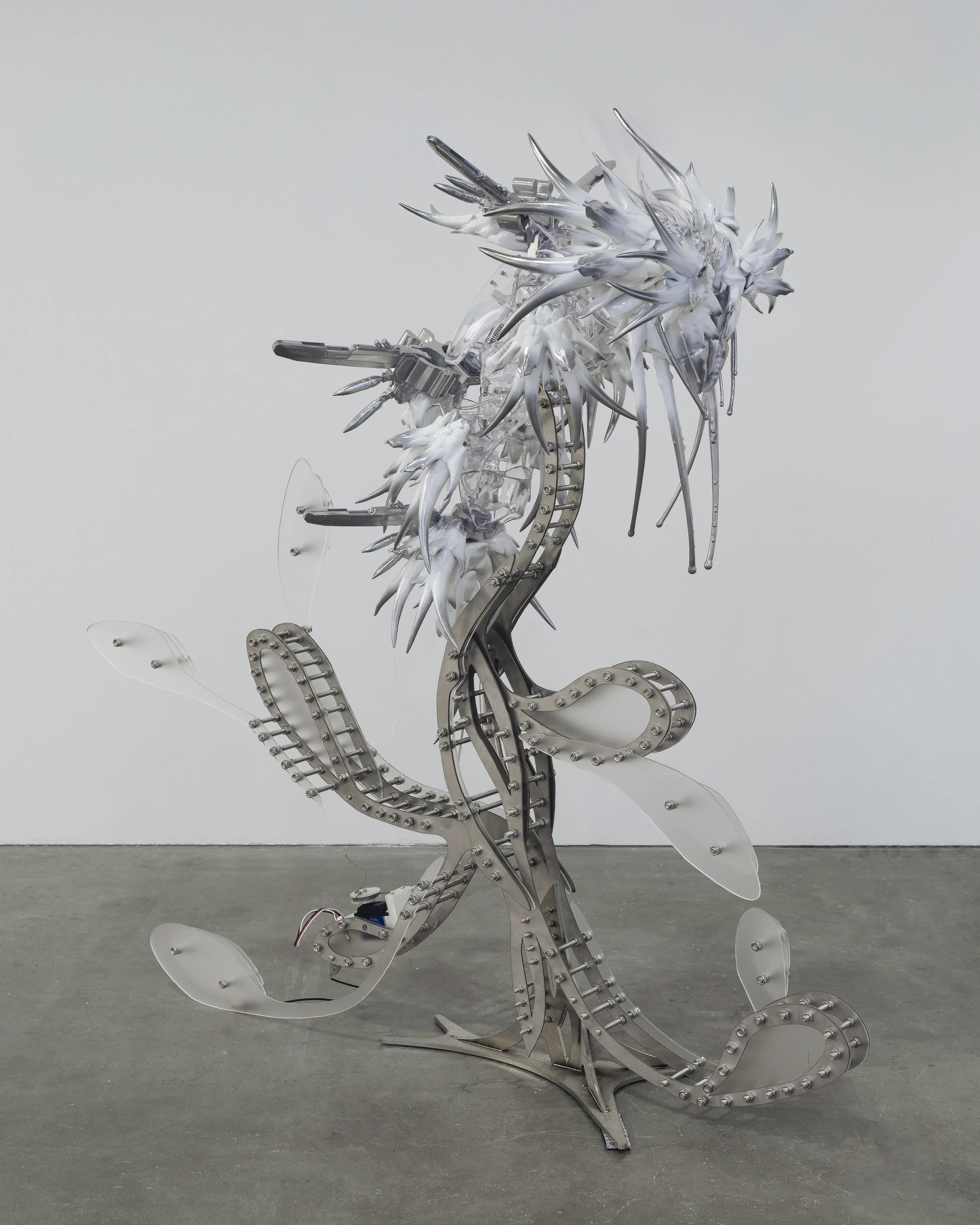
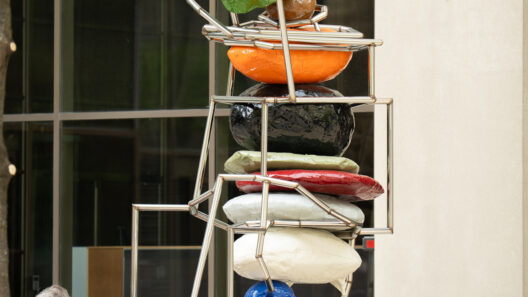
Prototype0037 RAID 0, 00 Zhang, 2025, 2024 Silver plated resin, SLA, 304 stainless steel, 316 stainless steel, 104 x 70 x 77 cm, Installation view in Art SG, Photo credit: Gazelli Art House
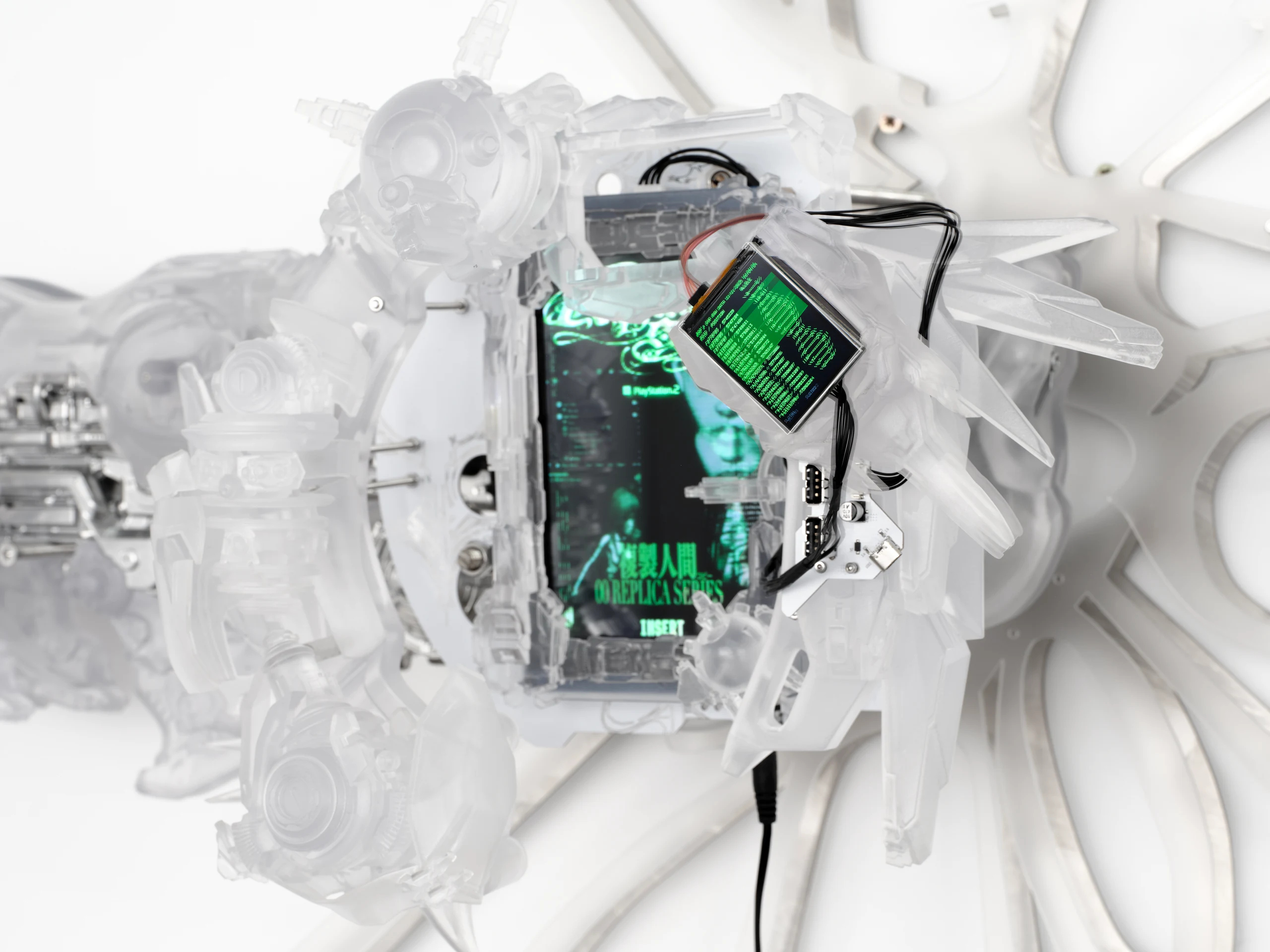
In the Replica series, this question becomes particularly direct. Zhang introduces her own DNA into a programmed system that generates a digital entity. The character develops gestures, habits and anxieties, lives in a room, consumes snacks and energy drinks, vapes and sometimes turns into a rabbit. Time moves forwards and backwards, as though its life were caught in a loop. These details are odd, even funny, but they make the work more recognisable than it might first appear.
What remains of a self-portrait when its subject is never finished? In Replica, identity is not depicted once and for all. It is repeated, altered and condensed into information and behaviour. The reference to DNA does not suggest that biological code can fully explain a person. Instead, the distance between a real body and its simulated version becomes central to the work.
00 Replica Series 001 2026 95*65*55cm 2d pixel game, dna, Screen, resin, integrated AI system, ESP32, servo Installation view in Mud Gallery
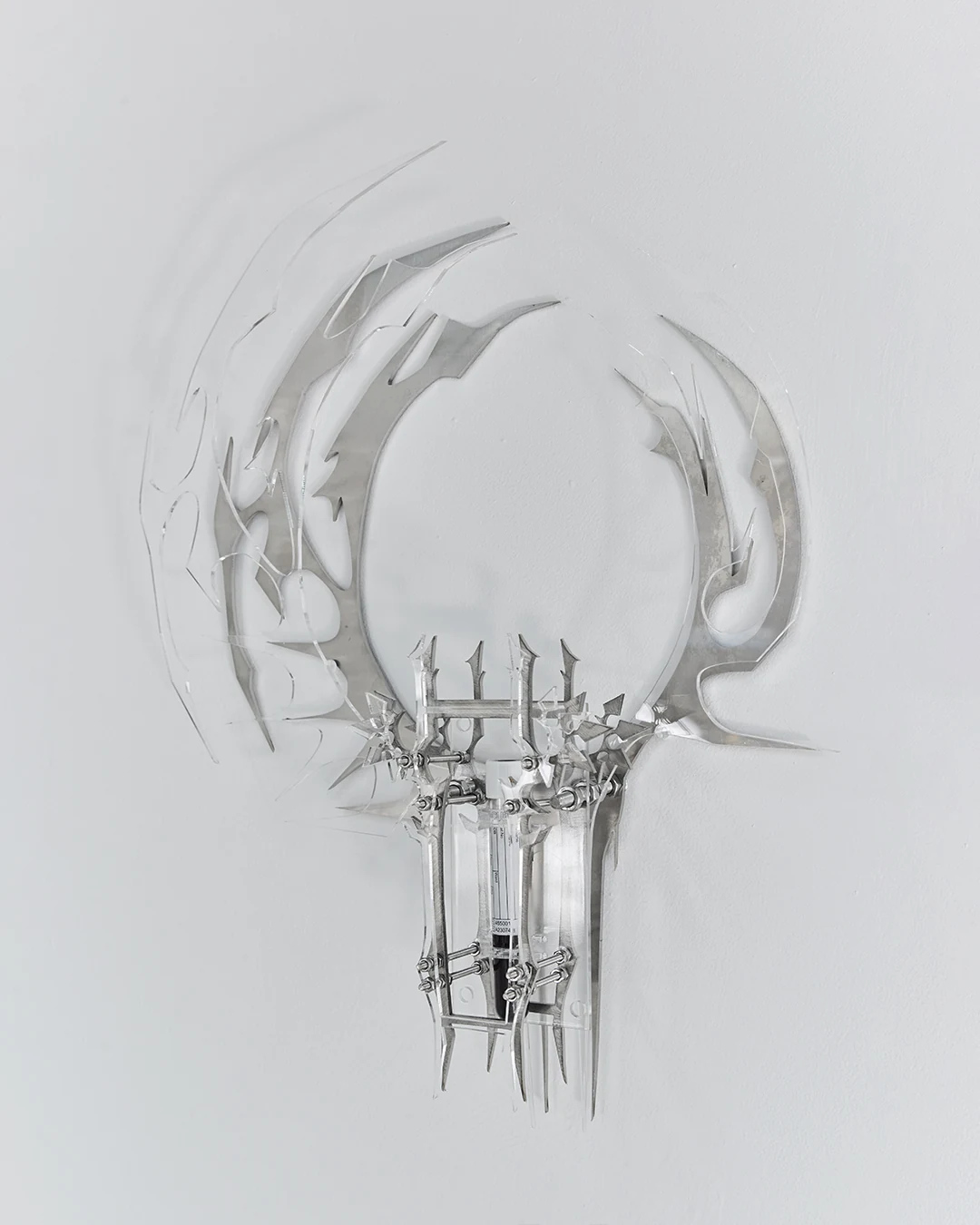
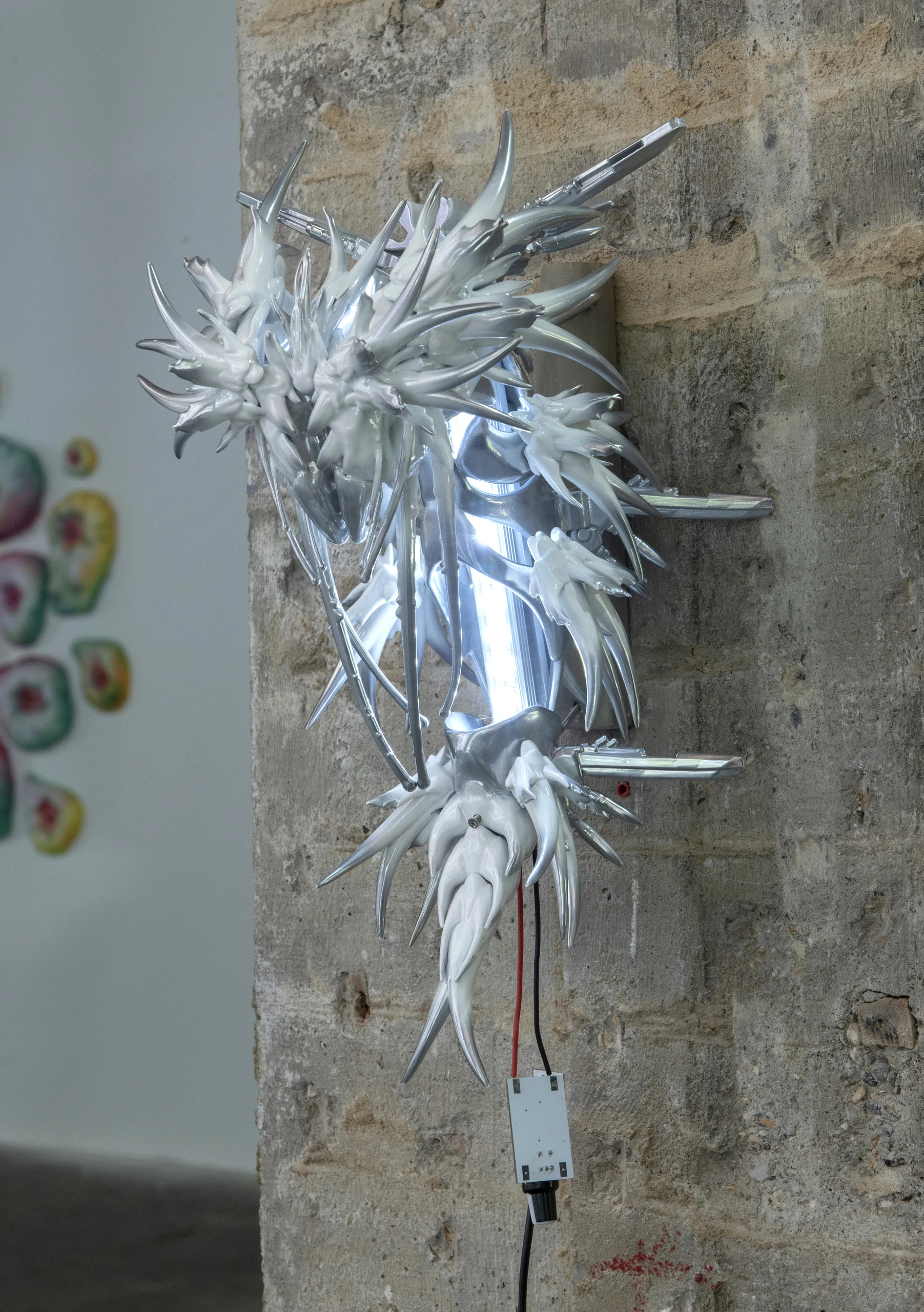
The physical dimension matters just as much. Sculptures from the Prototype series combine steel, resins and industrial components, sometimes incorporating liquids and mechanical devices. They are not merely props for the games. They look like fragments of larger systems, objects that have entered the gallery from a reality we cannot see in full. The boundary between screen and exhibition space begins to weaken: rather than only looking at a world, the visitor encounters its material traces.
Zhang’s attention to production also has a geographical and biographical dimension. She connects her research to the Yangtze River Delta, a region shaped by industrialisation, manufacturing networks and expanding infrastructure. Here, technology does not simply mean innovation or futuristic imagery. It also means labour, changes to the landscape and histories that are erased or rewritten. This offers a useful way to understand her materials: not as neutral surfaces, but as products of specific economies and processes.
In Honey, related narrative structures reappear across parallel universes populated by different characters and species. The figures change, but cycles of destruction, attempts to establish order and efforts to break repetition persist. Players move between roles, from workers to the Queen. Yet changing position does not necessarily mean dismantling the hierarchy. This is a simple but important distinction: a system can allow movement without allowing its underlying rules to change.
This is where the work takes on a political dimension. Who has access to technological tools? Who can use them only in prescribed ways? And who has the power to modify them? Zhang does not present technology as an automatic solution to social problems. The same infrastructure that enables new forms of expression can also reinforce existing inequalities. Her fictional worlds become a way of discussing the present without reproducing it literally.
There is, of course, a challenge in a practice that builds such elaborate universes: audiences may feel they need to learn too many stories, characters and references before they can properly enter the work. Its strongest moments come when the complexity of the system becomes a clear experience: a choice that turns out to be restricted, a character repeating the same gestures, or an object that seems to have arrived from somewhere else. These situations remain legible even without knowing every detail of the narrative.
Zhang’s contribution to contemporary art lies in her ability to connect personal experience, gaming culture and social structures. Her works do not only ask who we are in an age of digital identities. They also ask who determines the conditions under which we can become someone. That question applies as much to everyday life as it does to a game. Perhaps the value of these imagined worlds is not that they offer an escape, but that they send us back to our own with a useful doubt: if the rules were written, could they also be changed?
Prototype0037 ISO-9660 00 Zhang Silver plated resin, translucent PLA, 304 stainless steel, 316 stainless steel and integrated light systems 45 x 39 x 18 cm Installation view in Bomb Factory