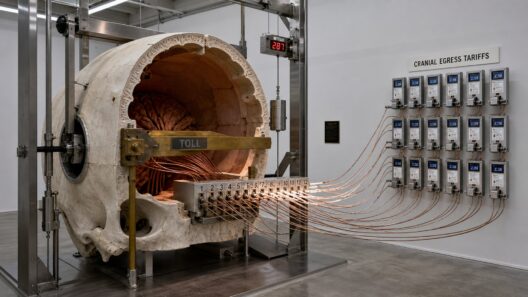


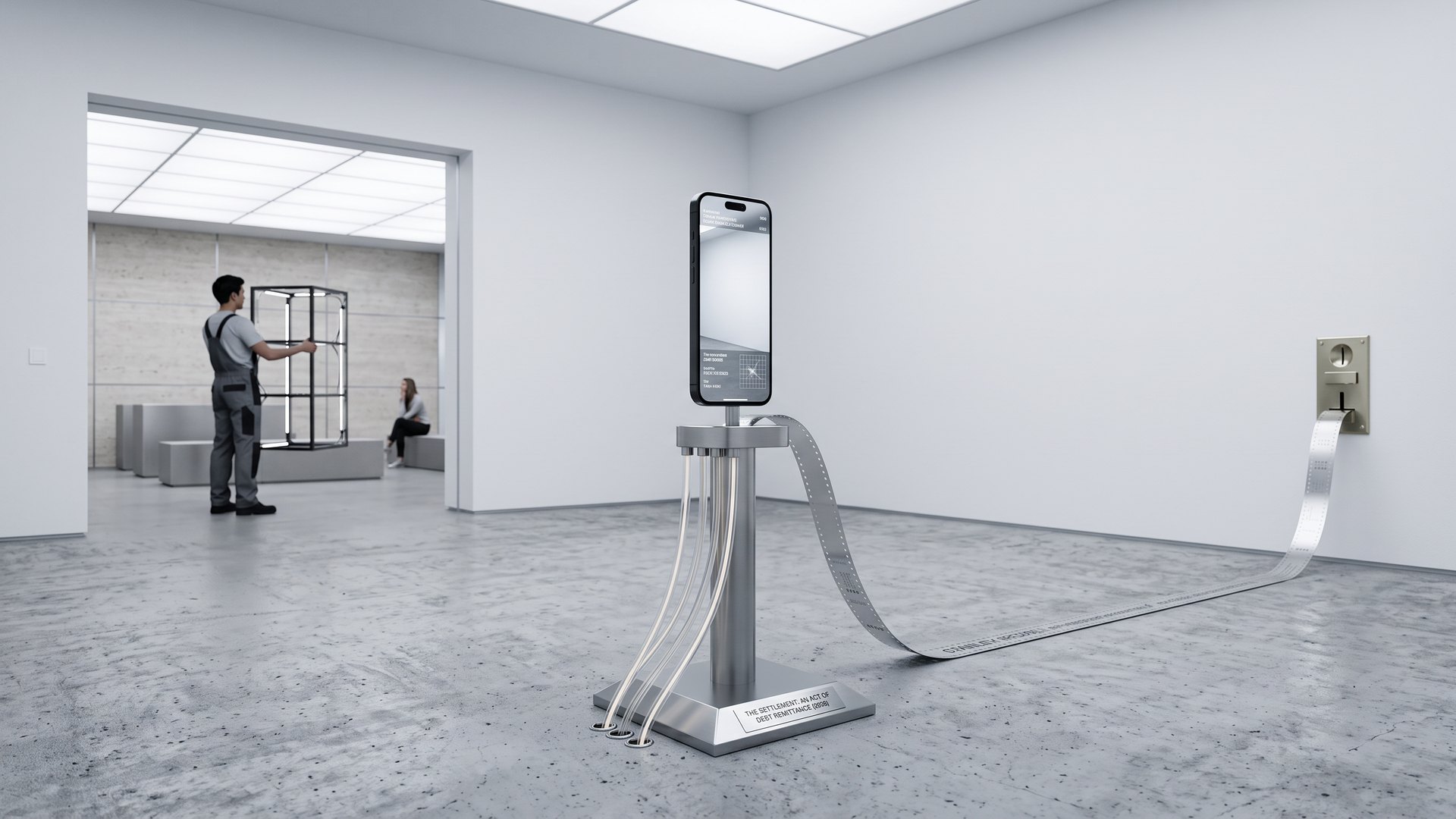
A phone rises before a painting, a meal, a police line, a face at dusk. The lens opens with the calm of infrastructure, and perception enters an account. Every glance carries a tariff: battery, bandwidth, storage, ranking, future retraining, legal exposure, reputational gain. The device receives the world as an asset class, and the image begins its administrative life before any viewer calls it memory.
The contemporary picture arrives with a balance sheet folded into its surface. Its luminosity carries the quiet labor of extraction: cobalt and wrists, server farms and moderation queues, compression standards and behavioral prediction. The image pays its operators through attention, data, proof, leverage, and repetition. What appears as visibility functions as a settlement system, distributing value among platforms, brands, institutions, police archives, collectors, and models trained on the residue of desire.
A picture now moves through protocols that measure its obedience. It gains force through circulation, through the capacity to solicit gestures, extend dwell time, generate likeness, trigger purchase, stabilize identity, and furnish evidence. The old drama of representation gives way to an operational theater in which images act upon bodies by entering the infrastructures that rank, price, and govern them. Vision becomes one phase in a longer transaction.
The question concerns command. The image commands because it has been formatted to travel, to attach, to verify, to summon, to score. Its economy begins inside the device and extends through feeds, archives, markets, courts, training sets, dashboards, and publics shaped by ranking. The picture survives as a contract between perception and rule, and every contract seeks performance.
CORE · Members
Continue reading
This essay is part of CORE. Membership opens it in full, with every CORE essay, the Hypercast library and the Fakewhale AI Curator.