
There was a precise moment when the drift became perceptible.
It unfolded through a shift in interface cadence and distribution protocols, a subtle recalibration between the structure we had built and the field that was recalibrating beneath it. Entering Fakewhale CIRCLE and returning to Fakewhale LOG began to register as a modulation in attention metrics: a distinction that had functioned as an active threshold started operating as a historical layer within the project’s own feed logic.
To grasp this transition requires returning to what that separation enabled within a specific configuration of the art system.
For a defined phase in the evolution of contemporary art, compartmentalization operated as necessary architecture. Digital art, blockchain-based art, institutional contemporary art: these categories functioned as epistemic devices that oriented investment flows, structured ranking systems, and established recognition protocols capable of producing dense vertical communities. They generated exposure time, concentrated dwell time, and built dedicated economies with their own parameter space of legitimacy.
Fakewhale CIRCLE emerged within that configuration. A concentrated space. A chamber of theoretical and curatorial pressure calibrated to a specific segment of the field.
Fakewhale LOG inhabited another operational register: public surface, connective environment, narrative interface that braided languages, generations, institutions, and experiments within a broader distribution network. Two distinct devices along a single trajectory, each modulating visibility through different exposure logics.
Today that threshold is tangible.
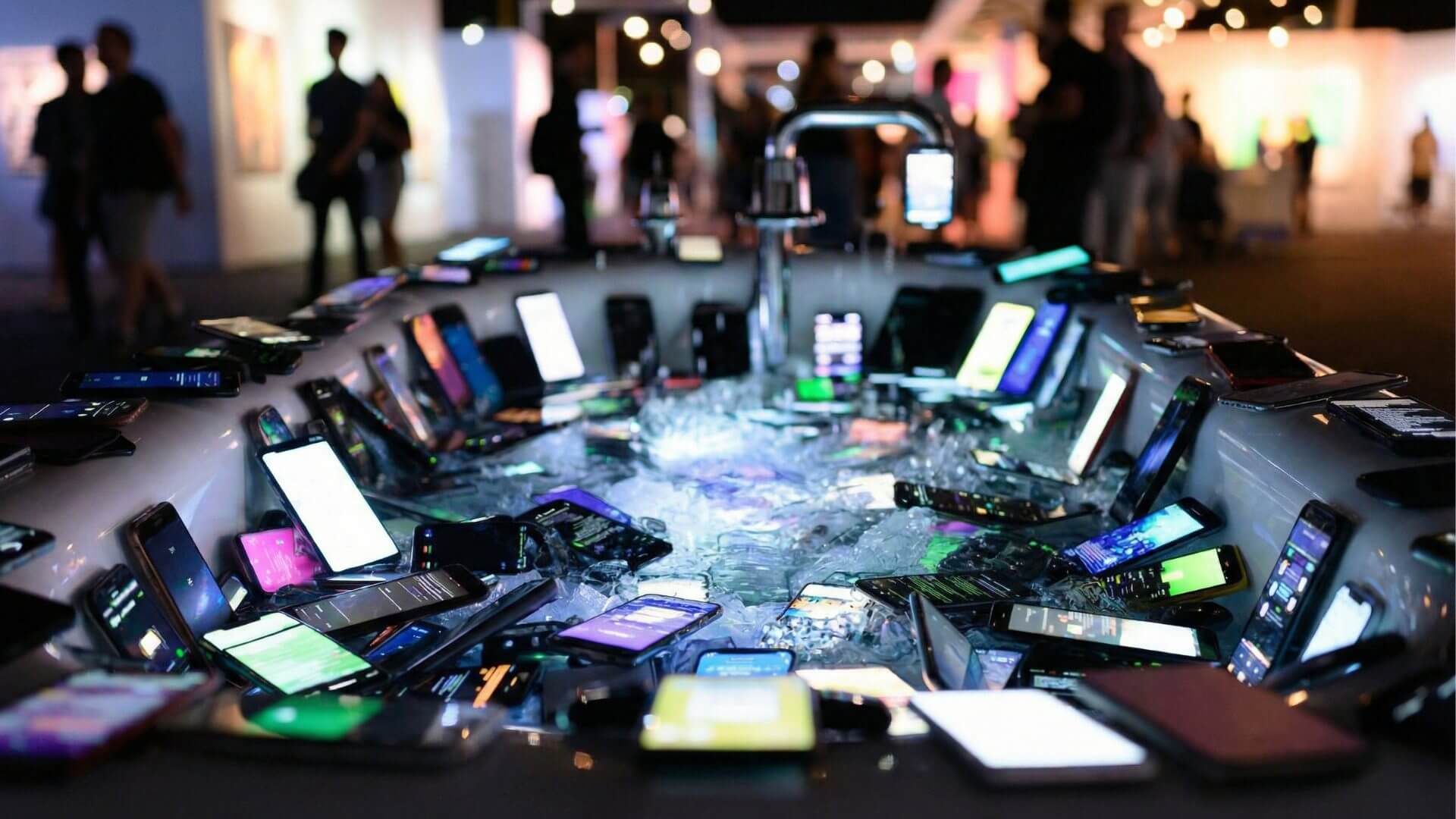
The contemporary context has progressively integrated what once appeared as separate stacks within the cultural device ecology. Native digital practices converse with institutional frameworks across shared bandwidth; blockchain has embedded itself as operational infrastructure within cultural traceability systems; artificial intelligence functions as a production environment rather than a technological spectacle; attention economies have recalibrated access, recognition, and permanence through algorithmic sorting and notification rhythm.
The field has densified.
As density increases, architecture recalibrates its segmentation and governance.
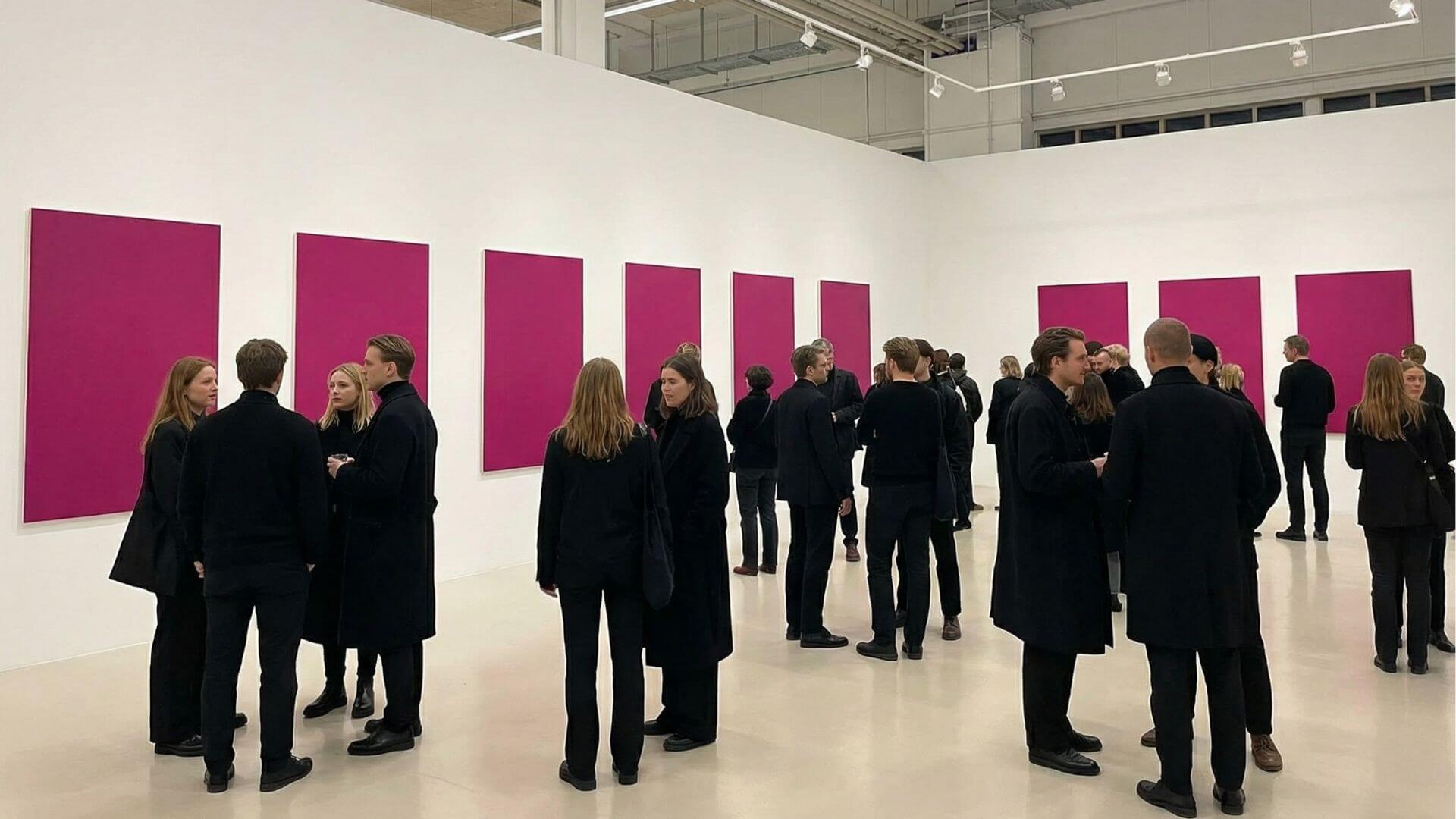
Maintaining a rigid distinction between CIRCLE and LOG began to diverge from the lived topology of contemporary art. Practices traverse multiple layers of the interface; artists operate across exhibition space, smart contract, and distributed protocol; audiences move fluidly between formats, markets, institutions, and decentralized networks, guided by ranking systems and attention metrics rather than categorical borders.
Separation accompanied an emergence phase. Integration accompanies maturation within a field whose compression rate has intensified.
This passage registers as an organic necessity. When a project originates in an artistic vision, its structure evolves alongside the field’s transformation; infrastructure follows the generative impulse that animates it, adapting its segmentation to shifts in distribution logic and perceptual threshold.
The time of convergence has arrived. We assume it as part of the process.
The threshold we have crossed extends beyond internal organization. It belongs to a broader mutation of contemporary art within an integrated post-digital condition, where fragmentation loses dominance as paradigm and a stratified ecosystem emerges, readable only through models capable of holding heterogeneous complexities within a single governance frame.
From here, the transition takes shape.
From fragmentation to convergence.
CORE · Members
Continue reading
This essay is part of CORE. Membership opens it in full, with every CORE essay, the Hypercast library and the Fakewhale AI Curator.