
“The Illusion of Thinking”: Learning to Fail

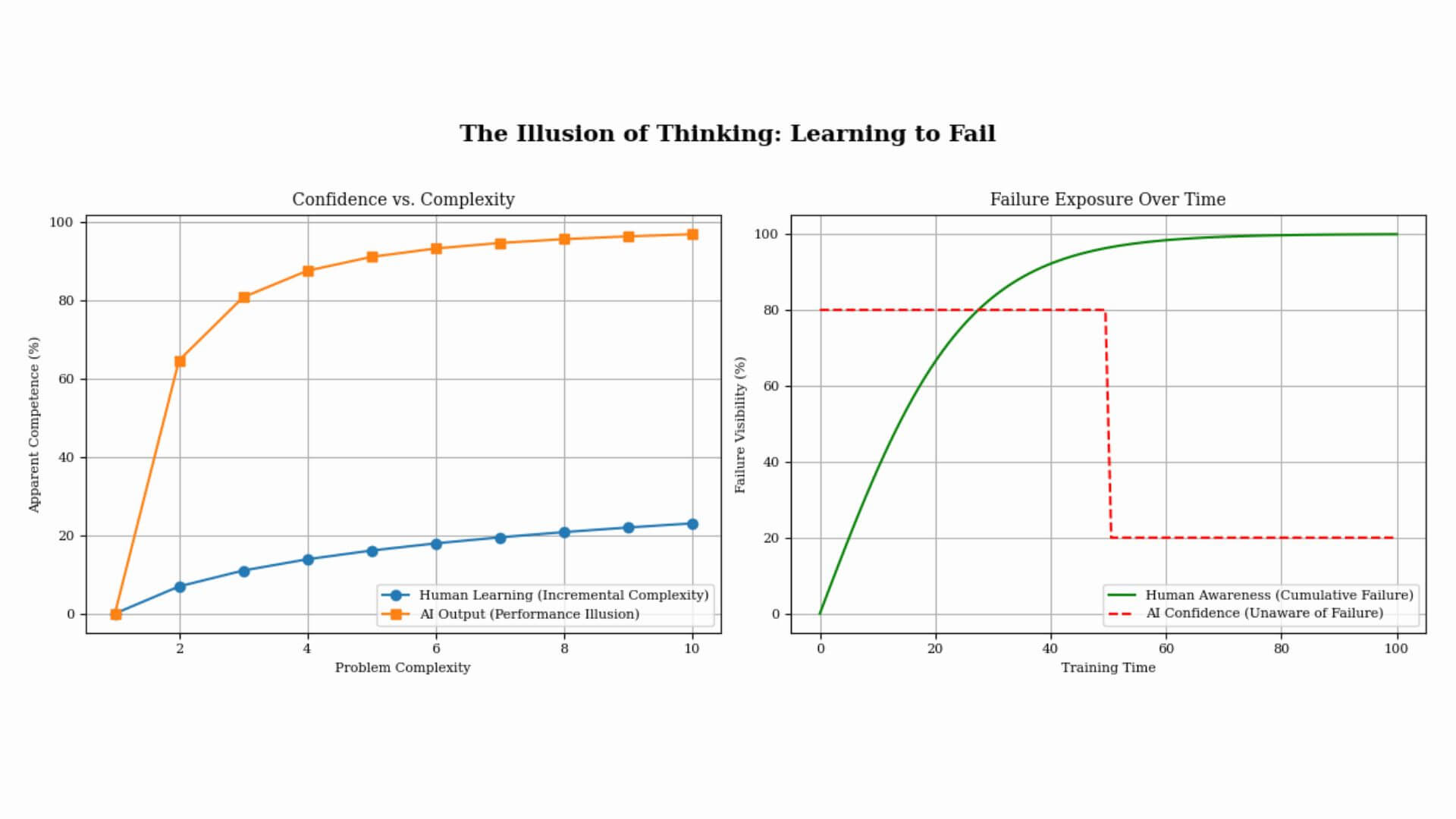
A few days ago, we published The Illusion of Thinking, a speculative detournement of an Apple research paper on artificial reasoning. The operation was simple: we replaced the subject “AI” with “artwork,” revealing how the logic of simulation, optimization, and surface-level depth applies equally to certain modes of contemporary art-making. The resulting text was received not as parody, but as resonance. It gave language to an unease many had felt but not yet articulated,  that some artworks, like some machines, no longer think. They perform the gesture of thinking. They appear to feel. But something beneath the surface remains inert.

In the days that followed, we encountered a different kind of response, one that did not stop at aesthetic simulation but pushed further, into the question of learning itself.

What if the real difference between machine and human, between artificial intelligence and artistic intelligence, is not one of output, but of failure?

What if complexity, in its deepest sense, cannot be generated by systems that are designed to succeed?

This article begins from that shift.


CORE · Members

Continue reading

This essay is part of CORE. Membership opens it in full, with every CORE essay, the Hypercast library and the Fakewhale AI Curator.