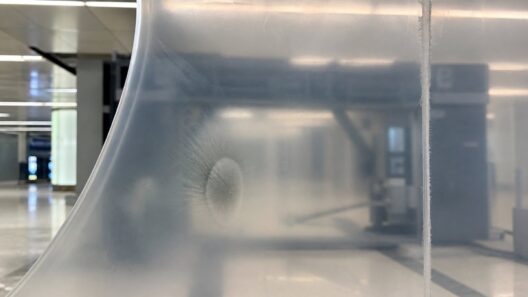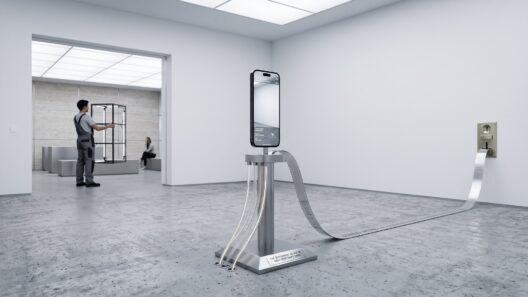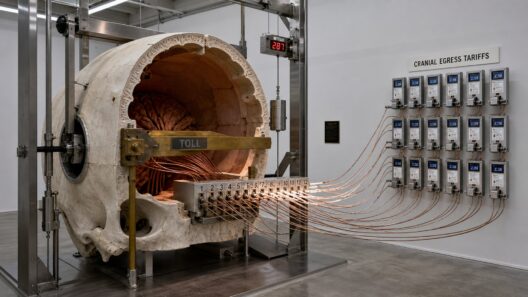

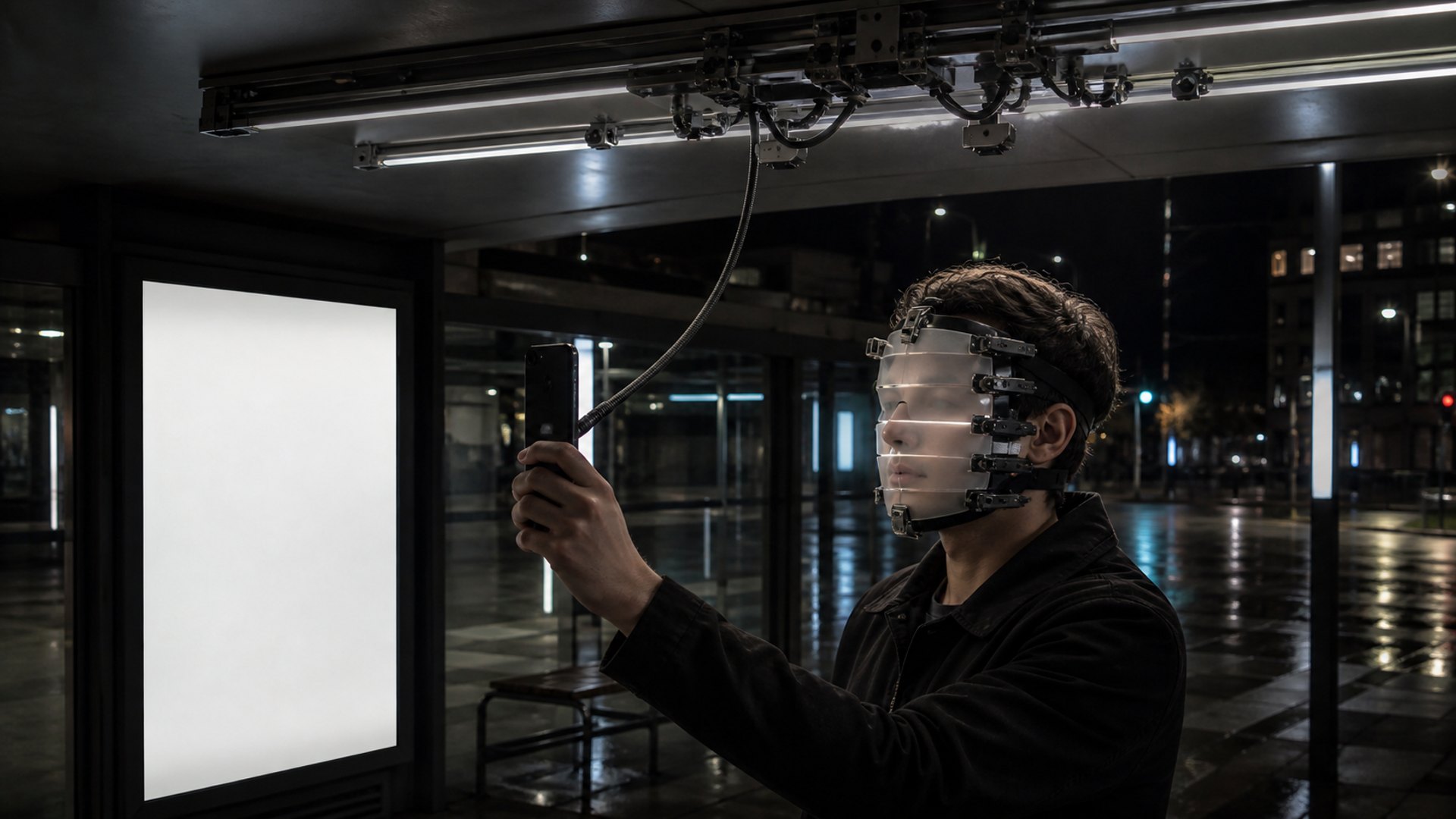
A phone is lifted toward a face in bad light, and the preview corrects the scene before the shutter has any claim on it. Skin enters a pipeline of exposure balancing, denoising, segmentation, compression, ranking, and memory; the image arrives already trained by other images, already bent toward a mean that presents itself as technical care. The device performs a small civic act: it decides which surfaces receive clarity, which gestures receive legibility, which bodies travel fluently through the interface.
Synthetic vision begins as an atmospheric condition inside the feed. A generative model receives the world through distribution, and distribution arrives as a political weather system: recurrent poses, commercial faces, optimized interiors, spectacular ruins, touristic horizons, compliant bodies, readable moods. The model learns the temperature of appearance before it learns any object, because the archive stores previous regimes of attention as visual climate.
The right to appear now passes through probabilistic custody. A face, a landscape, a crowd, a wound, a celebration, a protest, a domestic room, each becomes available to vision through latent proximity and platform governance. The image gains circulation when it can be ranked, moderated, labeled, monetized, compressed, recalled, and recombined; appearance becomes a transaction between memory and permission.
The synthetic image carries a paradox with administrative precision. It extends visibility by industrializing resemblance, and it narrows visibility by making resemblance the condition of entry. What appears appears through what has already been counted; what returns returns as the future tense of an archive.
CORE · Members
Continue reading
This essay is part of CORE. Membership opens it in full, with every CORE essay, the Hypercast library and the Fakewhale AI Curator.