We photograph a sunset with a phone, and the image we receive is more beautiful than what the eyes saw. The sky is more saturated, the shadows more legible, the faces sharper than the real light allowed. Between the instant we press and the instant we look, something has intervened: a sequence of operations that fused several exposures, recognized a face, decided how much sharpness to apply, and reconstructed detail the sensor never truly gathered, all governed by training bias settled long before the shutter.
What we hold in our hand resembles a document, and it carries all of a document’s authority. It has the air of a recording, a proof, a fragment of world retained. Yet it is the product of a chain of decisions aimed at a result fixed in advance, a version of the sunset built to resemble a shared idea of sunset rather than that specific sky on that specific evening. We asked for a testimony and received a plausible prediction shaped inside parameter space.
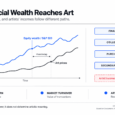
The same operation now governs much of what we look at each day. A map projects a city into navigable lines and erases everything irrelevant to orientation. A graph compresses a year of existence into a curve that rises or falls. A dashboard translates a complex phenomenon into a surface readable at a glance, its layout tuned by platform governance. In each case the same subtle movement occurs: the world is delivered already processed, already interpreted, already made compatible with our capacity to read it quickly.
A historical continuity runs through this drift, and it deserves recognition before we interrogate it. For over a century the technical image was bound to the real by a physical thread. Light struck a sensitive surface and left a trace, and that trace was a proof of presence. That thread has thinned progressively, toward a point where the image can exist while passing entirely through latent space, with nothing ever standing before a lens.
This text investigates that point. It seeks the moment when computation ceases to be an instrument serving vision and becomes its final layer, the level at which the image is decided through algorithmic sorting. It is the passage from a gaze that received the world to a gaze that reads its optimized rendering, and with it the very nature of what we call seeing begins to shift beneath our feet.
CORE · Members
Continue reading
This essay is part of CORE. Membership opens it in full, with every CORE essay, the Hypercast library and the Fakewhale AI Curator.