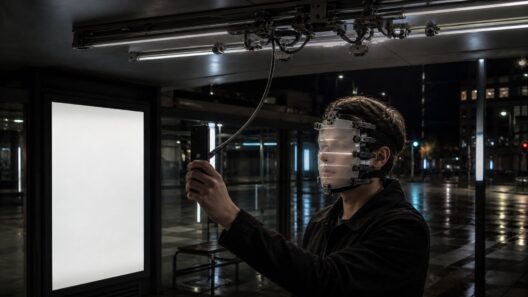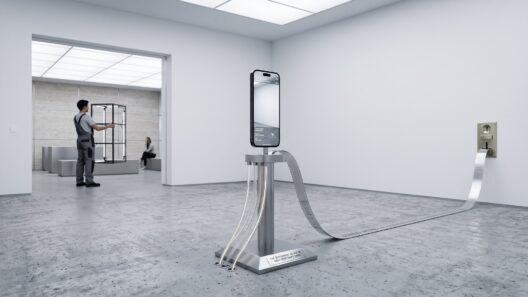


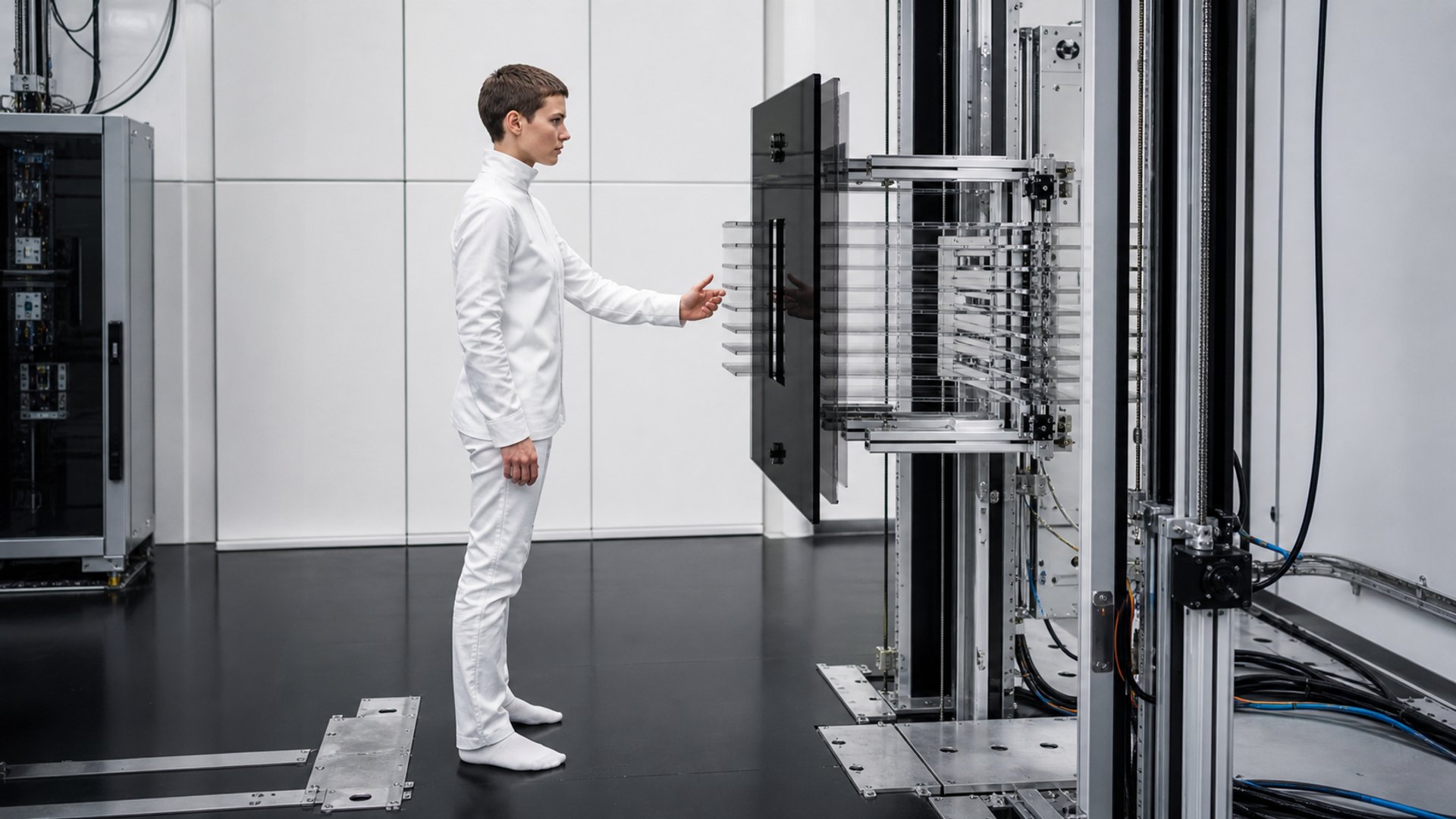
A thumb pauses above the glass before the image arrives. The interface has already narrowed the gesture into a corridor of likely continuations, and attention enters that corridor as if entering its own inclination. The device appears passive because its calculation has moved upstream, into the interval where perception becomes readiness and readiness becomes action. Feed logic begins there: in the prehistory of the touch, where habit is converted into addressable probability.
Prediction gives form to proximity. The platform learns the distance between a face, a phrase, a purchase, a pause, a return, then presents that distance as intimacy. What appears as personal relevance emerges from a distributional architecture that treats desire as a pattern of recurrence, a tempo of exposure, a measurable susceptibility to adjacency. The image reaches the subject already carrying a small social contract: remain near what resembles the next version of yourself.
The interface governs through softness. It arranges options, reduces friction, accelerates assent, then lets the subject experience alignment as spontaneity. Ranking becomes a climate rather than an order, a pressure system that bends the visible before any explicit command appears. Power resides in this atmospheric arrangement, where the possible is curated as comfort and the probable acquires the warmth of recognition.
Every prediction produces a remainder. Hesitation, misclick, boredom, delay, stray attention, and awkward refusal become data at the edge of capture, signals whose value rises precisely because they disturb the smoothness of the expected path. The interface dreams of complete anticipation, while desire persists as a moving excess inside the protocol that measures it. The future arrives as an interface condition, and the present learns to behave accordingly.
CORE · Members
Continue reading
This essay is part of CORE. Membership opens it in full, with every CORE essay, the Hypercast library and the Fakewhale AI Curator.