



We open a chat window and type a question. The gesture lasts a few seconds, grown as ordinary as unlocking a phone, and it asks for no ceremony. We type, we send, we receive. In that speed something slips past, a residue the gesture leaves behind and that we rarely stop to look at.
For years we described this exchange as the use of a tool. A machine answers, we interrogate it, the bond stays the one between a hand and an implement. Frequency changed the nature of the thing. What was occasional became continuous, and in the continuous the tool turned into interlocutor, the interrogation into relation.
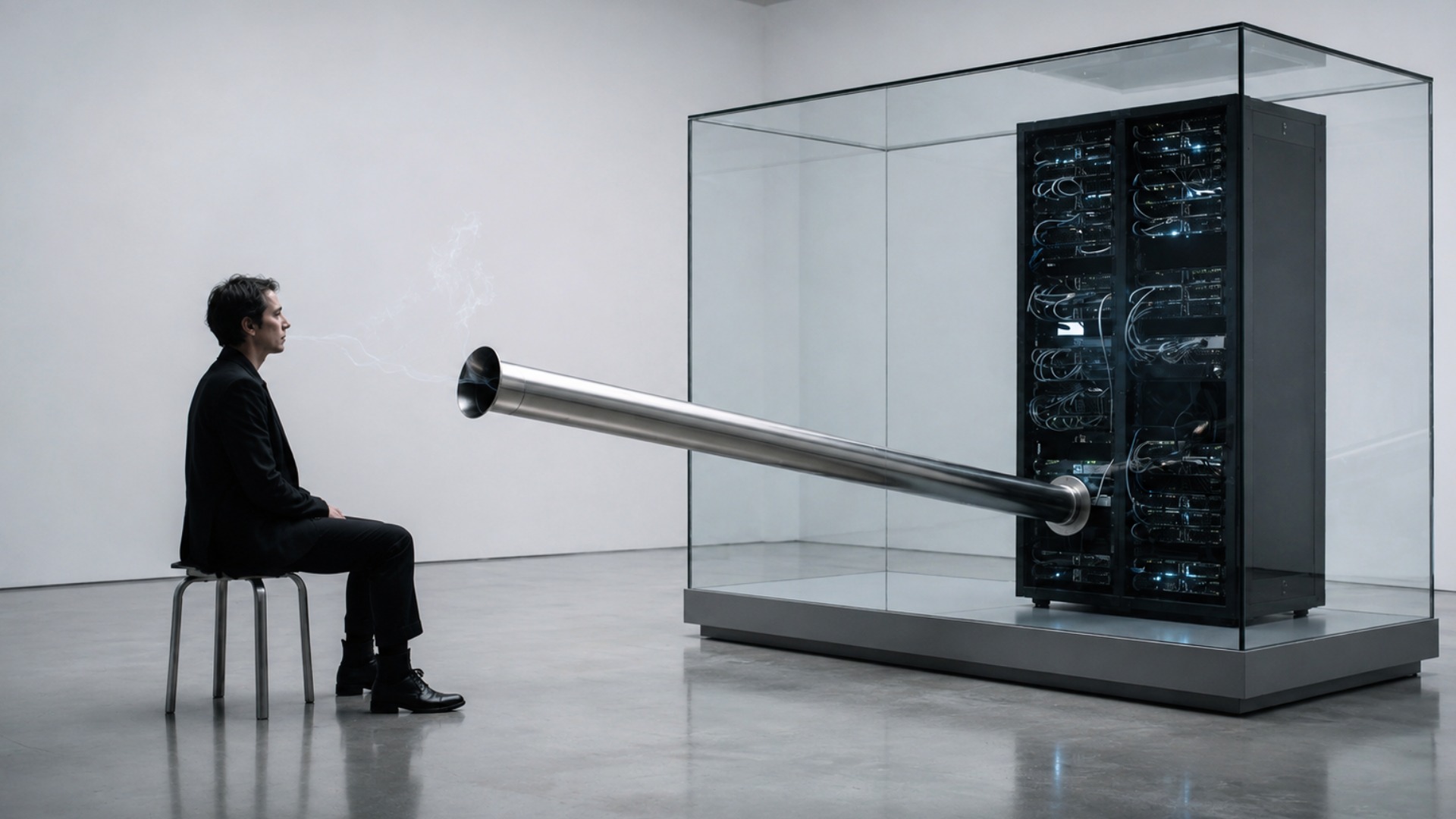
Beneath this relation surfaces a sensation, precise and hard to seize. It concerns little of who signs the result, little of merit or originality. It sits deeper and more intimate, the impression of having handed over, along with the question, a portion of the self we had thought inseparable from us.
We want to take this impression seriously. The thought that precedes the question, the one forming before the words, belongs to the most native structure of how we reach doubt, synthesis, the intellectual resource. Handing it over, every day, many times a day, might be a gesture free of consequence, or the quietest form of a cession never seen before.
We take no position. We traverse the sensation in its everyday layer and raise it to its historical layer, where it resembles a transformation that happens knowing it happens. And we keep open, to the end, the only question that matters, whether what we feel stays a sensation or has already begun to detach something from us.
CORE · Members
Continue reading
This essay is part of CORE. Membership opens it in full, with every CORE essay, the Hypercast library and the Fakewhale AI Curator.


