



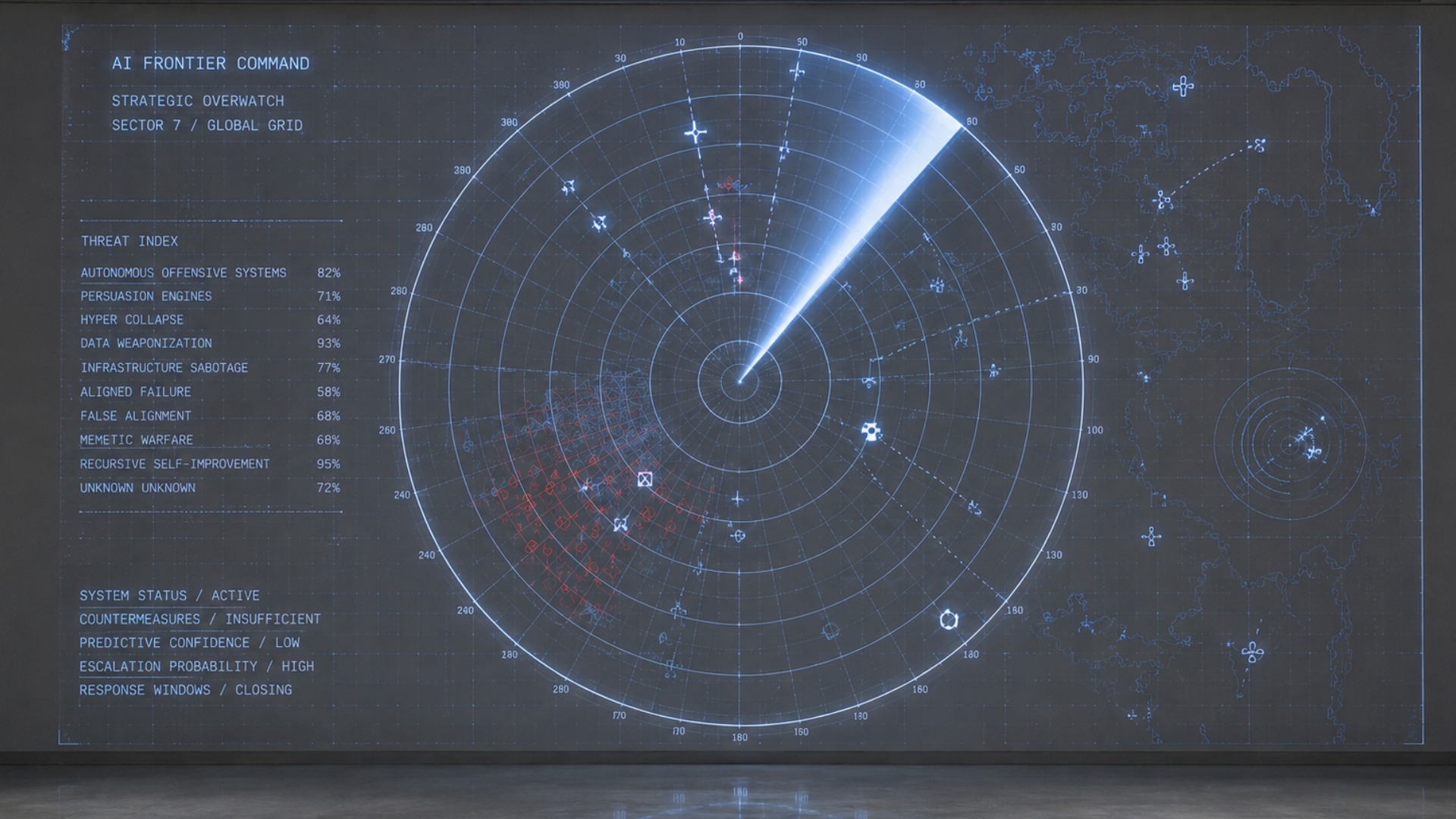
At 5:21 pm Eastern Time on June 12, 2026, Anthropic received a formal directive from the United States government. The subject was a language model: Claude Mythos 5, capable of writing, reasoning, synthesizing, and creating across every domain it has been directed toward. Three days earlier, that model had been presented to the world as the most powerful instrument for intellectual and creative production ever built. Three days later, it was subject to the same export control framework governing weapons-grade uranium.
This essay leaves the adjudication to others. Whether the directive was proportionate, whether the jailbreak was as narrow as Anthropic maintained or as serious as the administration concluded, falls outside what the available evidence can settle with confidence. What the structure of the event does illuminate is something larger: what this classification reveals about frontier creative instruments, and about the condition of creative practice when those instruments cross a threshold that the existing regulatory vocabulary can name but lacks a prior framework for managing.
Fable 5 and Mythos 5 share the same underlying architecture: identical weights, the same attention structure, the same training process. What separates them is the presence or absence of a classifier layer that intercepts sensitive requests before they reach the core model. Mythos 5 is Fable 5 with that interception system removed. The two models differ in access; in architecture, they are the same. The US government treated that access differential as equivalent to the difference between reactor-grade and weapons-grade material. That treatment is part of what this essay examines.
Cultural production has never, across its history, generated a tool that governments classified under the same regulatory regime as strategic weapons technology. That this occurred in June 2026 is, before it is anything else, an epistemic event: something about the nature of capability, past a certain threshold, has shifted in ways that the existing categories of art, technology, and security are each adequate to describe in isolation and collectively unable to describe at the same time.
CORE · Members
Continue reading
This essay is part of CORE. Membership opens it in full, with every CORE essay, the Hypercast library and the Fakewhale AI Curator.


